The Ecommerce Revenue Leakage Audit: 8 Hidden Leaks Quietly Destroying Your Profit
Most Ecommerce Brands Do Not Have a Traffic Problem. They Have a Leakage Problem.

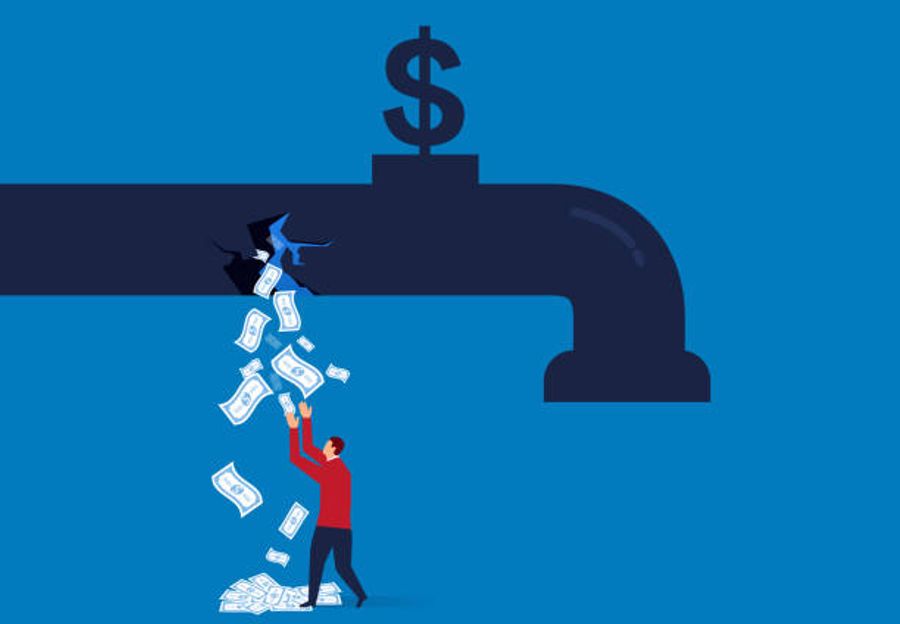
Most ecommerce brands respond to slow growth the same way: spend more on ads. More traffic, more budget, more pressure on campaigns to compensate for whatever else is not working.
The problem is that scaling a leaking business does not fix the leaks. It scales them. Every additional visitor driven into a broken conversion funnel, a misattributed affiliate programme, or a slow-loading product page produces the same disappointing return as the one before it, at a higher total cost.
The average Shopify store converts only 1.4 percent of its traffic, according to Uptek's 2026 Shopify conversion rate analysis. Top-performing stores convert at 3.2 to 4.7 percent. The gap between those two numbers is not a traffic gap. It is a leakage gap. The stores converting at 3 to 4 percent have the same product, the same traffic sources, and the same platform as the stores converting at 1.4 percent. The difference is that they have systematically plugged the revenue leaks the others have not.
This article breaks down the eight hidden revenue leaks that cost the average Shopify brand far more than any ad campaign could recover, and the specific tools to identify and fix each one.
01What Is a Revenue Leak?
A revenue leak is any inefficiency, friction point, attribution issue, or operational problem that causes lost revenue or reduced profitability. Unlike a broken checkout or an out-of-stock product, which are obvious and immediate, revenue leaks are chronic. They happen on every single transaction, or every single visitor session, compounding silently over weeks and months before anyone notices the financial impact.
A store generating $100,000 per month with a 1.4 percent conversion rate and a 0.5 percent improvement to 1.9 percent would generate approximately $36,000 more per month in revenue from the same traffic, a 36 percent lift from a single metric. That is the scale of what leakage represents, and it explains why the highest-leverage profitability work in ecommerce is almost always fixing existing systems, not acquiring more traffic.
02Leak 1: Product Detail Page Leaks
Your product detail page (PDP) is the primary decision-making surface for every buyer who visits your store. It is where curiosity either converts to intent or disappears. Most PDPs are underperforming because they were built for the brand, not for the buyer.
What it looks like: Weak product copy that describes features without addressing the buyer's actual concerns. Insufficient or low-quality images. Missing social proof in the form of reviews, ratings, or user photos. A confusing or buried call to action. Poor mobile experience where key elements are cut off or require excessive scrolling. A BigCommerce study found that 67 percent of consumers consider image quality very important when making a purchase decision.
Symptoms: High product page bounce rate. Low add-to-cart rate (below 4.6 percent, which is the Shopify average per Uptek's data). High time-on-page without conversion, which indicates interest without resolution. Research by Uptek shows that 70 percent of consumers trust online reviews as much as personal recommendations. A PDP without substantial review coverage is leaving that trust signal empty.
Tools: Hotjar records session replays and heatmaps showing where buyers scroll, click, and abandon on your PDPs, identifying exactly which element is causing drop-off. Microsoft Clarity is a free alternative to Hotjar that provides session recordings and click maps without usage limits. Lucky Orange combines session recording with live visitor monitoring and built-in form analytics showing where users stop completing key fields.
03Leak 2: Attribution Leaks
Attribution leaks do not directly lose you revenue. They lose you something almost as valuable: the accurate data you need to make good decisions about where to invest your budget.
What it looks like: Default last-click attribution gives 100 percent of conversion credit to the last touchpoint before purchase. On Shopify stores running Meta ads, Google Ads, email, and an affiliate programme simultaneously, multiple channels touch every customer before they buy. Last-click systematically undercredits the channels that introduced the customer (paid social, organic content) and overcredits the channels that appeared last (email, retargeting, coupon extensions). Since iOS 14.5, browser-based pixel tracking has missed a significant percentage of conversions from Apple device users, making the data more incomplete than most brands realise.
Symptoms: ROAS inconsistencies between what Meta reports and what your actual revenue shows. Channels that appear to underperform being the ones that actually drive the most first-touch discovery. Difficulty explaining why paid ad spend reductions seem to reduce overall revenue disproportionately.
Tools: Triple Whale is the most widely used multi-touch attribution platform for Shopify DTC brands. It shows the full customer journey across paid social, paid search, organic, email, and affiliate touchpoints and allows you to compare last-click, first-click, and linear attribution models side by side. Northbeam uses machine learning to model attribution across channels and is strong for brands running significant paid media where impression-based influence is important. Hyros is server-side tracking that is less affected by iOS restrictions and cookie blocking, producing more complete attribution data than pixel-based tools alone.
04Leak 3: Affiliate Leaks
Affiliate leaks are one of the most financially damaging and least visible of the eight leaks. They involve paying commissions on customers you already acquired through other channels, because coupon extensions or cashback affiliates inserted themselves at the final moment of the checkout journey.
What it looks like: A customer clicks your Meta ad, browses your product page, adds to cart, and proceeds to checkout. A coupon browser extension activates automatically, fires an affiliate tracking event, and overwrites the existing session cookie. Under last-click attribution, the extension collects the commission. Your paid ad acquired the customer. The extension contributed nothing. You pay twice.
Symptoms: Coupon and cashback partners appearing consistently at the top of your affiliate performance reports. Very short click-to-conversion time gaps (seconds rather than hours or days) in your affiliate data. Affiliate revenue rising without corresponding total revenue growth. Paid ads ROAS declining without any change in campaign quality.
Tools: Impact is the enterprise-grade partner management platform for brands with larger affiliate programmes. It supports rule-based attribution override, partner-type restrictions, and fraud detection for suspicious click-to-conversion patterns. Refersion is the most practical Shopify-native affiliate platform and supports partner approval controls, commission rules by traffic source, and coupon code attribution management. BrandVerity monitors how your brand name is being used across paid search and affiliate channels, detecting extensions and coupon sites violating your brand terms. For single-use codes that prevent public indexing, Social Snowball generates unique per-referral codes that expire on first use, technically eliminating the public code sharing problem.
05Leak 4: Email and SMS Leaks
Your email and SMS list is the only customer channel you own outright. It is not subject to algorithm changes, rising CPMs, or platform policy updates. Most Shopify brands dramatically under-monetise it.
What it looks like: No post-purchase onboarding sequence. No win-back campaign for lapsed customers. Batch-and-blast email strategy with no segmentation by purchase history, product category, or engagement level. SMS not used at all, or used only for transactional notifications. Email marketing generates an average ROI of $36 to $40 for every $1 spent according to Litmus and DMA data. Abandoned cart email open rates run at 40 to 45 percent, the highest of any email type.
Symptoms: Repeat purchase rate below 25 percent. Falling LTV over customer cohorts. Revenue per email sent below $0.10, which indicates poor segmentation and flow coverage.
Tools: Klaviyo is the dominant email and SMS platform for Shopify brands, with native integration that allows flows triggered by specific Shopify events: add-to-cart, purchase, product view, and return. Its segmentation engine allows targeting based on purchase history, predicted LTV, and engagement recency. Postscript is the leading Shopify-native SMS platform for conversational SMS marketing and abandoned cart recovery by text. Omnisend is a lower-cost alternative to Klaviyo that combines email and SMS in a single platform with strong Shopify integration and pre-built flow templates.
06Leak 5: Average Order Value Leaks
Every customer who buys from you represents a fixed acquisition cost. The only way to improve the economics of that cost without lowering it is to increase the revenue generated per customer. If a customer is going to buy anyway, getting them to spend more in the same transaction is pure margin improvement.
What it looks like: No product bundles. No cart upsell or cross-sell recommendations. No quantity break discounts encouraging larger single purchases. A product recommendation engine that shows random products rather than items algorithmically matched to what is already in the cart. Buy-now-pay-later not enabled, which research shows boosts AOV for higher-ticket items. BNPL usage is growing rapidly with global BNPL payments projected to exceed $560 billion by end of 2026.
Symptoms: AOV that has remained flat over 12 months despite product catalogue growth. Less than 10 percent of orders containing more than one product. No measurable revenue from post-purchase upsell offers.
Tools: Rebuy is the most feature-rich Shopify upsell and cross-sell platform, using machine learning to recommend products based on purchase history and cart contents, with native integration into product pages, cart, checkout, and post-purchase pages. Zipify One Click Upsell specifically handles post-purchase upsell pages that appear after checkout completes, allowing customers to add additional items with a single click without re-entering payment details. These post-purchase upsells are among the highest-converting offers in ecommerce because the customer has already committed to buying. Zipify Pages and Replo are landing page builders that support bundle pages and product comparison layouts that encourage higher AOV ordering.
07Leak 6: Checkout Leaks
Cart abandonment costs global ecommerce $4 trillion annually. The Baymard Institute's research identifies $260 billion of that as recoverable in the US and EU alone, purely through better checkout design and flow. Your checkout is either the last conversion point or the last leak. Most stores have both happening simultaneously.
What it looks like: Unexpected costs at checkout. The Baymard Institute identifies extra costs including shipping as the primary cause of abandonment, cited by 48 percent of abandoners in 2025 data. Forced account creation before purchasing. A checkout requiring more than four minutes to complete (66 percent of buyers expect completion within four minutes according to Swell's checkout statistics). Absence of trusted payment methods: digital wallets were used by 53 percent of shoppers for online purchases in 2024. No buy-now-pay-later option. Trust signals like security badges and return policy summaries missing from the checkout flow.
Symptoms: Cart-to-checkout conversion rate below 45 percent, which is the Shopify average. High checkout abandonment rate above 70 percent. More than 30 percent of traffic coming from mobile with significantly lower mobile conversion rates than desktop.
Tools: Shopify's checkout is one of the fastest and most optimised in ecommerce, and enabling Shop Pay reduces abandonment for returning customers by 10 to 15 percent compared to guest checkout. Shop Pay Installments (BNPL) converts customers who hesitate at high cart totals. Google Analytics 4 funnel exploration reports show exactly where users are dropping out of your checkout flow step by step, identifying the specific field or page causing abandonment. Shopify Plus brands have access to checkout extensibility, allowing customisation of trust signals, upsells, and field removal within the checkout flow.
08Leak 7: Site Speed Leaks
Page speed is a direct, measurable conversion rate driver. The relationship between load time and revenue loss is documented and consistent. Site speed is often overlooked as a revenue lever because it is technical rather than commercial, but the financial impact of a slow site rivals that of a weak ad campaign.
What it looks like: A 1-second improvement in mobile page load time increases conversion rates by approximately 7 percent according to Google and Deloitte joint research. Every 100ms increase in load time reduces conversion rates by approximately 7 percent. Pages loading under 2 seconds have 15 percent higher conversion rates than pages loading in 5 or more seconds. Fifty-three percent of mobile users abandon a page that takes more than 3 seconds to load. Given that mobile traffic represents approximately 70 percent of Shopify traffic, site speed on mobile is the single most impactful technical variable in your conversion rate.
Symptoms: Mobile bounce rate significantly higher than desktop bounce rate. Google PageSpeed Insights score below 50 for mobile. Core Web Vitals failing: Largest Contentful Paint above 2.5 seconds, or Cumulative Layout Shift above 0.1. Shopify's online store speed report scoring below the average for similar stores.
Tools: Google PageSpeed Insights provides a score for both mobile and desktop with specific recommendations: unoptimised images, render-blocking scripts, unused JavaScript from installed apps, and elements affecting Core Web Vitals. GTmetrix provides a more detailed performance breakdown with waterfall charts showing which specific assets are loading slowly. TinyPNG is a free image compression tool that typically reduces PNG and JPG file sizes by 60 to 80 percent without visible quality loss. For Shopify-specific performance, the built-in Online Store Speed report in your Shopify admin provides a speed score benchmarked against similar stores.
09Leak 8: Inventory and Operations Leaks
Operational leaks are the least visible of the eight and often the most directly damaging to customer trust. They are the problems that cause orders to be cancelled after payment, products to show available when they are not, and revenue to disappear into refunds and chargebacks.
What it looks like: Selling on multiple channels (Shopify, Amazon, TikTok Shop) without real-time inventory sync, causing overselling and cancellations. No buffer stock setting protecting against the lag window between sale and inventory update. Poor demand forecasting causing stockouts on best-selling SKUs during peak periods. No reorder automation, so brands manually track stock levels and often reorder too late. Shopify alone handles $292.3 billion in GMV annually. The operational infrastructure behind that volume matters.
Symptoms: Cancellation rate above 2 percent. Negative reviews citing order cancellations or out-of-stock experiences. Irregular stockout events on top-selling products. Customer service volume driven primarily by order status questions.
Tools: Shopify's native inventory management handles basic stock tracking and low-stock alerts for single-channel sellers. For multi-channel brands, Cin7 is a comprehensive inventory and order management system that integrates with Shopify, Amazon, and TikTok Shop and syncs inventory in near real-time across all channels. Skubana (now Extensiv Order Manager) is an operations platform built for high-volume multichannel sellers, handling inventory allocation, demand forecasting, and order routing from a single dashboard. For Shopify-only brands not yet ready for a full IMS investment, the Stocky app by Shopify provides demand forecasting and purchase order management natively within the Shopify admin.
10The Bigger Problem: Most Brands Only Fix Acquisition
Every brand in the world knows how to spend more on ads. Increasing ad budget is a straightforward operational decision. Fixing conversion rate, attribution, affiliate leaks, email monetisation, AOV, checkout friction, site speed, and inventory management requires more structural work, more specialist knowledge, and more willingness to look at the systems behind the revenue rather than just the numbers in front of it.
A 5 percent increase in customer retention increases profits by 25 to 95 percent, according to Bain and Company research cited in multiple ecommerce statistics analyses. A single checkout optimisation can increase conversion rates by up to 35 percent according to Swell's checkout statistics. A 1-second site speed improvement on mobile increases conversion rates by 7 percent. Each of these is a compounding improvement. They stack on each other. A 15 percent improvement in checkout conversion combined with a 10 percent AOV increase and a 20 percent improvement in repeat purchase rate does not produce a 45 percent revenue improvement. The compounding produces significantly more.
11How to Run a Revenue Leakage Audit
A revenue leakage audit does not need to be complex. It needs to be systematic. Work through your funnel from top to bottom, measuring each conversion point against benchmark and identifying the gap.
Step 1: Set your benchmarks. Know your current conversion rate (Shopify average is 1.4 percent, top performers are 3.2 to 4.7 percent), add-to-cart rate (average 4.6 percent), cart-to-checkout rate (average 45 percent), cart abandonment rate (average 70 percent), AOV relative to your category, repeat purchase rate (average 27 percent), and site speed score (check PageSpeed Insights).
Step 2: Identify the largest gaps. Where is your performance furthest below benchmark? A 1 percent conversion rate against a 1.4 percent average is a different priority from a 0.5 percent gap in repeat purchase rate. Calculate the revenue impact of closing each gap to benchmark.
Step 3: Prioritise by financial impact and implementation speed. Some leaks are both high-impact and fast to fix (improving image quality, enabling Shop Pay, adding missing redirects). Others are high-impact but require more investment (implementing a full post-purchase email flow, migrating to a multi-touch attribution tool). Start with the highest-impact, fastest implementations. Build on them.
Step 4: Measure everything before and after. A change that does not have a baseline is invisible. Document your current performance on every metric before making any change. Measure again 30 days after implementation. The data tells you what is working and what to prioritise next.
12Scaling a Leaking Business Only Scales the Leaks
The eight leaks in this article are not dramatic failures. They are normal inefficiencies that every ecommerce business has to some degree. The difference between a profitable, scaling business and one that is stuck is not the presence of these leaks. It is whether anyone is systematically looking for and fixing them.
Swell's checkout statistics data states directly: the ROI of checkout optimisation often exceeds that of traffic acquisition efforts. The same principle applies across all eight leaks. The marginal value of fixing a product page, improving email segmentation, or plugging an affiliate attribution leak is almost always higher than the marginal value of spending more on paid traffic through an unchanged funnel.
Run the audit. Identify your two or three largest leaks. Fix them with the right tools. Measure the outcome. Then run the audit again. That cycle, repeated quarterly, compounds into a business that converts better, retains more, and generates more revenue from the same traffic, every time.
Sources
- Uptek: Shopify Conversion Rate Statistics 2026 Full Breakdown (1.4% Average, Top Performers Data)
- Triple Whale: Ecommerce Benchmarks 2026 Key Metrics and Industry Data
- Easy Apps Ecom: 50 Plus Shopify and Ecommerce Conversion Statistics for 2026 (Google/Deloitte Speed Research, Litmus Email ROI)
- Blend Commerce: Ecommerce Conversion Rate Benchmarks 2026 Shopify CRO
- Growth Suite: Cart Abandonment Rate 2026 Statistics Real Data (Baymard Institute)
- Swell: 35 Custom Checkout Statistics for 2026 Conversion Benchmarks (Baymard $260B Recovery Data)
- Email Vendor Selection: 38 Plus Cart Abandonment Rate Statistics 2026 Updated
- Upsella: Cart Abandonment Statistics 2026 What Every Shopify Store Should Know
- Ringly.io: 50 Shopify Store Statistics and Trends for 2026 (BFCM Data, Mobile Conversion Gap)
- Influencer Marketing Hub: Affiliate Attribution Integrity Coupon Poaching and Cookie Stuffing Defense 2025
- Marketing LTB: Customer Retention Statistics 92 Plus Stats 2026 (Bain and Company 5% Retention Data)
Frequently Asked Questions
What is a revenue leak in ecommerce?+
What is the average ecommerce conversion rate for Shopify stores?+
What causes cart abandonment and how do I reduce it?+
How much does site speed affect ecommerce conversion rates?+
What tools should I use to audit revenue leaks on my Shopify store?+
Is it more profitable to fix revenue leaks or spend more on ads?+
How often should I run a revenue leakage audit?+
Fixing Your Leaks Is the Fastest Path to Profitability. Not More Ad Spend.
We build the conversion systems, attribution infrastructure, and operational foundations that plug revenue leaks and turn existing traffic into more profit. Book a free audit.
