How Much Money Do I Need to Start a Shopify Store?
The Real Startup Budget Most Ecommerce Gurus Never Talk About


Most Shopify founders ask the wrong question. They ask: how much does a Shopify store cost? The better question is: how much does it cost to acquire customers? Because building the store is the straightforward part. Getting strangers on the internet to trust you enough to buy from a brand they have never heard of, selling a product they cannot physically touch, is where the real expense begins.
Most stores do not fail because the founder spent too little on the website. They fail because the founder spent too much on the website and too little on customer acquisition. The answer to how much money you need depends on your business model, your product category, your customer acquisition strategy, and your growth expectations. This guide breaks all of that down honestly.
01The Three Types of Shopify Business and Their Budgets

The Hobby Store ($300 to $1,000 budget). This is a brand being tested on minimal budget with no major growth expectation in the immediate term. The goal is learning: how does Shopify work, what does a product page look like, how do I handle fulfilment. At this budget, the founder is the product photographer, the customer service team, and the marketing department simultaneously. Valid as a learning experience. Not a path to a scalable business without additional investment. Set appropriate expectations: at this budget, the goal is the first sale, not consistent revenue.
The Startup Brand ($2,000 to $5,000 budget). This is where most serious founders should expect to start. At $2,000 to $5,000, there is budget for a proper product validation cycle: product samples, some photography, a product seeding programme to generate UGC, and an initial paid advertising test. Not enough to scale, but enough to learn whether the product sells and to generate the content and social proof needed to make a second round of investment worthwhile.
The Growth-Focused Brand ($10,000 or more budget). At $10,000 or above, a founder can run a systematic product validation and scaling programme: multiple product samples across several candidates, a professional photography session, a creator seeding programme reaching 30 to 50 creators, 15 to 25 paid UGC videos, a sustained paid advertising test across Meta and Google, email marketing infrastructure, and enough runway to make a real scaling decision rather than one forced by budget depletion.
02What Shopify Actually Costs
The store itself is almost never the major expense. Shopify Basic at $39 per month. A domain at $14 per year. A premium theme at $350 to $425 if the product category requires elevated visual quality (Dawn is free and adequate for most categories at the validation stage). A review app (Judge.me has a free plan). Email marketing (Klaviyo is free up to 250 contacts). The essential app stack for a new store costs very little, because most of the apps founders genuinely need at launch have free tiers or cost under $30 per month.
Total store infrastructure for the first three months: $200 to $600 depending on whether a premium theme is purchased. This is the part of the budget that most founder content focuses on. It is approximately 10 to 20 percent of the total investment required to give a product a real chance at market validation.
03The Biggest Lie in Ecommerce
The belief that a better-looking store produces more sales is the most expensive lie in ecommerce startup culture. Customers buy because they trust the brand, because the product appears to solve a problem they actually have, because the price reflects fair value, and because other customers have confirmed the product works. None of these are affected by whether the homepage hero section uses a custom Liquid section or a theme default. A beautiful store with no traffic is worthless. A modest-looking store with strong social proof, authentic UGC, and a clear offer with a genuine guarantee converts traffic more reliably than a custom-built store with generic supplier photography and no reviews.
04The $3,000 Startup Budget
A realistic $3,000 allocation that gives a product a genuine validation opportunity:
| Item | Budget | Why This, Not Something Else |
|---|---|---|
| Shopify (3 months) + domain | $131 | Minimum viable infrastructure. Do not upgrade until revenue justifies it. |
| Premium theme (optional) | $0-$380 | Only if visual quality is a trust signal in your category. Dawn (free) works for most. |
| Product samples | $200-$400 | Non-negotiable. Cannot photograph, seed, or build conviction without physical product. |
| Product seeding (15-20 creators) | $400-$600 | Product + postage per creator. Generates authentic UGC for ads and organic at product cost only. |
| Paid UGC videos (3-5 videos) | $300-$500 | Faster creative for ads with more brief control. $100-$150 per video from budget creators. |
| Email marketing (Klaviyo free tier) | $0 | Free up to 250 contacts. Flows must be live before the first ad is turned on. |
| Paid advertising test (Meta or TikTok) | $700-$1,000 | Minimum for a real validation test. 3-5 creative angles, $30-$50/day for 7-14 days. |
| Total | ~$1,731-$3,011 | Every line item is either visible to customers or generates customer data. |
05Where Most Founders Waste Money
Custom Shopify themes. The most common and most expensive pre-revenue mistake. A custom theme at $3,000 to $10,000 does not improve conversion rate relative to a premium theme at $380 configured correctly with good photography. At the validation stage, no amount of custom development compensates for the absence of social proof, strong offer structure, and traffic.
Expensive logos and branding agencies. The customer never says 'I decided not to buy because the logo looked like it cost only $150.' They say 'I decided not to buy because there were no reviews.' Spend on trust signals, not brand aesthetics. A Canva logo is sufficient to launch. Investing in professional branding before product-market fit is confirmed is spending revenue that has not yet been generated.
Overbuilt funnels and automations. Complex email sequences, multi-step opt-in funnels, and sophisticated abandoned cart logic are valuable at scale. They are premature procrastination at 50 monthly visitors. Build the minimum retention infrastructure (email capture popup, welcome flow, abandoned cart, post-purchase) and add complexity only when the traffic to test it exists.
Agency retainers before validation. A $2,000 per month media buying retainer before the offer is validated and the creative is proven produces expensive data about a product that may not work. Validate the product and offer with direct founder-managed advertising first. Then add agency support when the product is proven and scaling is the constraint.
06What If You Only Have $1,000?
$1,000 is enough to learn but not enough to validate in the way that informs a scaling decision. At $1,000, the priority order is: Shopify Basic and domain ($53 for one month plus $14 for the domain), product samples ($150 to $250), product photography using a smartphone and natural window light (free), a product seeding programme to 10 to 15 aspiring creators at product cost plus postage ($150 to $250), Klaviyo free tier with essential flows configured, and $300 to $400 in paid advertising. The advertising budget is insufficient for a real Meta validation test but is enough to get the first learning data. Expect to use this $1,000 to discover what you do not yet know rather than to confirm product-market fit. The goal at this budget is the first sale, not consistent revenue.
07What If You Have $5,000?
$5,000 is a budget that gives a product a real validation opportunity. The additions above the $3,000 plan: a professional product photography session with a freelance photographer at $400 to $600 (the single highest-ROI visual investment available), extending the product seeding programme to 25 to 35 creators for more content volume and creative diversity, adding 5 to 8 additional paid UGC videos to provide more creative angles for the ad test, and expanding the advertising test budget to $1,500 to $2,000 for a more sustained validation with multiple rounds of creative iteration. At $5,000, the founder can make a properly informed scaling decision: the creative angles that produce positive unit economics are identified, the seeded content has generated organic reach data, and the email list from the advertising test has provided retention data.
08The Real Cost of Acquiring Customers
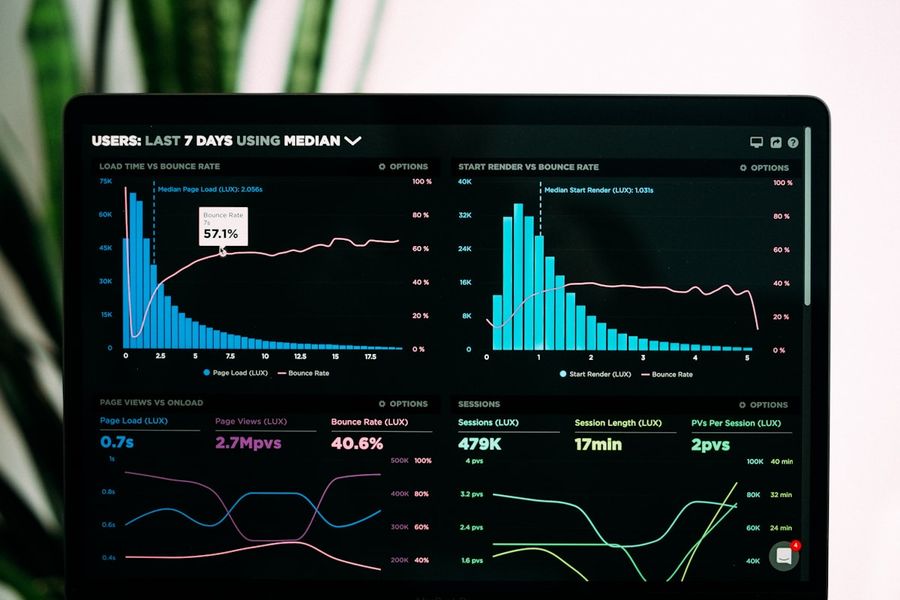
Traffic is rarely free. Trust is rarely free. Customer acquisition is almost always the largest expense in an ecommerce business, and it is the expense most founders dramatically underestimate when budgeting a launch. A Meta Ads validation test that provides meaningful data costs $700 to $1,000 minimum. A Google Shopping campaign that captures existing demand costs money every day it runs. A TikTok organic strategy that generates consistent reach requires consistent content production. A product seeding programme requires product cost and postage for every creator engaged. All of these costs are real and must be budgeted for before the store launches, not discovered after the development budget is spent.
The pattern in most failed Shopify stores is: $3,000 spent on website development and branding, $200 spent on advertising, zero sales, conclusion that ecommerce does not work. The correct pattern is: $500 spent on website and branding infrastructure, $2,500 spent on samples, content, seeding, and advertising, and a real dataset to make a scaling decision from.
09The Dropshipping Reality
The easiest part of dropshipping is launching a store. The store takes a weekend. Getting strangers to trust a brand they have never heard of, selling a product they have never held, at a price they can get from Amazon with faster shipping, is the hard part. Most dropshipping founders spend $2,000 on website development and $100 on marketing, then wonder why they have no sales. The ratio should be inverted. The store needs to be trustworthy enough to convert the traffic that marketing drives. It does not need to be a showcase of development skill before a single customer has visited.
10The Fastest Way to Waste Startup Capital
The fastest way to burn through startup capital is building things nobody asked for. Custom themes, custom features, complex automations built before traffic exists to test them, branding exercises conducted before the target customer has been verified. Most founders should spend more time understanding their potential customers than building websites. The founder who spends 30 hours reading Amazon reviews for competing products in their category, watching successful competitor TikToks, and talking to 20 potential customers learns more about what their store needs to do than a founder who spends 30 hours customising a homepage layout that no customer has yet seen.
11The Startup Advantage
Small brands have one genuine structural advantage over established competitors: speed. They can test a new product in two weeks. They can change their offer overnight. They can respond to customer feedback immediately. They can pivot without a committee or a quarterly planning cycle. This advantage is entirely negated when the startup capital is tied up in a custom Shopify build that takes three months and produces a store that is aesthetically impressive but commercially unvalidated. A launched, imperfect store generates feedback. An unlaunched perfect store generates nothing.
The goal in the early stage is not building the perfect Shopify store. It is building a store that is capable of generating the customer feedback, the sales data, and the social proof that tells you whether the product is worth investing more in. That requires a functioning store with trust signals, good photography, a strong offer, and customer acquisition budget to drive traffic to it. It does not require custom code.
Frequently Asked Questions
Can I start a Shopify store with $500?+
Can I start a Shopify store with $1,000?+
How much should I spend on ads to start a Shopify store?+
Do I need a custom Shopify store?+
What is the minimum budget for ecommerce success?+
How much should I spend on branding for a Shopify store?+
How much does Shopify cost per month?+
If You Have a Limited Budget, Spend Less Making Your Shopify Store Look Perfect and More Creating Demand, Generating Content, and Acquiring Customers.
Book a free strategy call and we will help you build a realistic launch plan for your specific budget.
