How to Affiliate Programs to Get More Sales in Shopify

Ready to Turn Affiliate Marketing Into a Real Revenue Channel?
Most Shopify brands already have customers and traffic. What they’re missing is the infrastructure that turns partnerships into predictable revenue. We help you: Select and configure the right affiliate platform Structure commissions that attract serious partners Build onboarding and tracking systems Recruit creators aligned with your audience Connect affiliate traffic to retention and email flows If you want affiliate marketing to become a core acquisition channel not just another installed app, let’s build it properly.
Affiliate marketing does not scale because you installed an app.
It scales because you built a structured distribution channel with aligned incentives, performance tracking, margin discipline, and consistent management.
The Shopify brands that turned affiliate programs into serious revenue engines treated them like core infrastructure. They recruited intentionally. They designed compensation carefully. They integrated affiliates into brand strategy. And they measured performance relentlessly.
Below is a deeper breakdown of how specific Shopify-powered brands leveraged affiliate-style programs to drive real growth, followed by practical frameworks you can apply to your own store.
Gymshark: Building a Long-Term Ambassador Infrastructure

Gymshark’s early growth was heavily driven by fitness influencers who functioned as brand ambassadors. While not every relationship was labeled “affiliate,” the structure mirrored performance-based affiliate systems.
What Gymshark Did Strategically
Gymshark did not run a public, open affiliate marketplace. Instead, they:
- Identified rising fitness influencers early in their careers
- Formed long-term ambassador agreements
- Issued personalized discount codes
- Structured compensation around performance
- Integrated ambassadors into brand launches and campaigns
- Highlighted ambassadors on Gymshark’s own channels
This created alignment between brand growth and creator income. Influencers were financially incentivized to promote repeatedly, not once.
Why It Worked
Gymshark built consistency instead of sporadic promotion. Influencers became extensions of the brand identity. Because audiences saw repeated endorsement over time, trust deepened and conversion rates improved.
The brand did not depend on paid ads alone. It created distributed authority across hundreds of fitness communities.
How You Can Apply This Model
Even if you are a smaller Shopify store, you can replicate the structure:
- Identify 20–30 creators who align tightly with your niche.
- Offer personalized discount codes rather than generic links.
- Provide clear commission percentages and payout timelines.
- Create long-term incentive tiers for top performers.
- Maintain communication and feature affiliates publicly when possible.
The key takeaway is simple: curate your affiliate network. Do not treat it as an open sign-up experiment.
MVMT Watches: Margin-Funded Affiliate Scaling

MVMT leveraged influencer-driven affiliate partnerships as a primary growth engine in its early years.
The Structural Advantage
Watches have strong margins. This allowed MVMT to offer aggressive commissions while remaining profitable.
They structured their affiliate system around:
- Unique discount codes per influencer
- Trackable referral links
- Clear payout terms
- Performance-based scaling
They prioritized Instagram and lifestyle content that blended naturally into creators’ feeds.
Why It Worked
High margins allowed MVMT to treat affiliate payouts as an alternative to paid advertising. In many cases, affiliate commissions were competitive with paid customer acquisition costs, but with stronger trust and brand perception.
Influencers were incentivized to create high-quality content because their earnings were directly tied to conversion.
How Shopify Store Owners Can Implement This
Before launching an affiliate program, calculate:
- Gross margin per product
- Average order value
- Paid advertising customer acquisition cost
- Maximum sustainable commission
If you can offer affiliates a commission that competes with paid advertising economics, you create a scalable incentive loop.
Affiliate programs fail when commissions are too small to motivate creators. They succeed when compensation matches the value being created.
Fashion Nova: Volume and Saturation Strategy

Fashion Nova built massive visibility through influencer-driven promotion that closely resembled a scaled affiliate system.
What They Did
Fashion Nova activated a large network of influencers across different audience tiers. Instead of focusing only on elite creators, they:
- Seeded products widely
- Encouraged repetitive promotion
- Distributed discount codes broadly
- Incentivized ongoing performance
The strategy was not selective. It was saturation-based.
Why It Worked
When audiences repeatedly see a brand across multiple creators in the same niche, perceived authority increases. Repetition builds familiarity, and familiarity drives purchase behavior.
Fashion Nova’s affiliate-like network created cultural presence within their segment.
How Smaller Stores Can Apply This
You do not need thousands of influencers. You need structured waves.
Consider this framework:
- Month 1: Recruit 10 micro-creators and offer 15 percent commission.
- Month 2: Reward top 3 performers with 20 percent commission.
- Month 3: Launch a limited-time bonus for affiliates who exceed a revenue target.
This creates momentum and performance competition.
Affiliate growth often requires energy injection through contests, tiers, and structured incentives.
Beardbrand: Education-Driven Affiliate Strategy
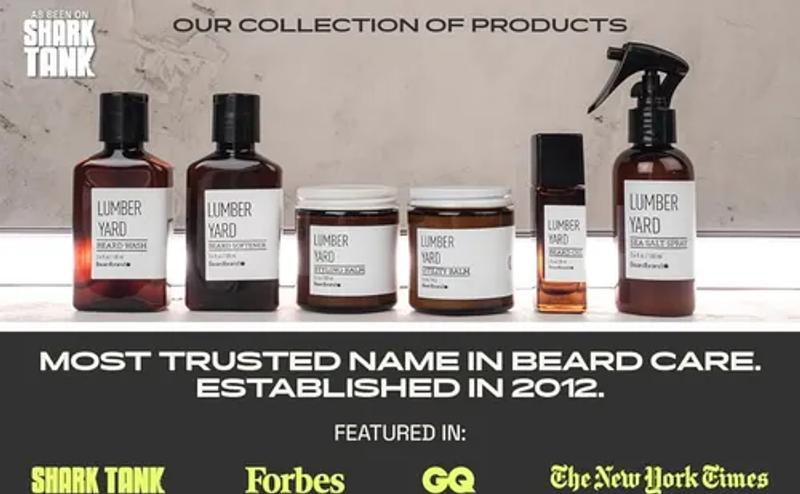
Beardbrand built growth through educational content partnerships rather than pure promotional posts.
What They Did
They aligned with:
- Barbers
- Grooming educators
- Male lifestyle creators
Instead of pushing discount codes aggressively, affiliates created tutorials, reviews, and grooming education content. Referral links were embedded naturally.
Why It Worked
Educational content converts differently from pure promotional content.
When creators explain:
- How to use the product
- Why it matters
- What problems it solves
Trust increases and refund rates decrease. Customers arrive pre-qualified.
This created long-term revenue stability rather than short-term spikes.
How You Can Apply This
If your product requires explanation, demonstration, or expertise:
- Target creators who educate, not just promote.
- Provide them with structured talking points and FAQs.
- Offer higher commission for tutorial-style content.
- Repurpose top-performing affiliate content into paid ads.
Education-based affiliates often produce higher lifetime value customers.
Blume: Community and Content Repurposing
Blume successfully blended affiliate marketing with user-generated content.
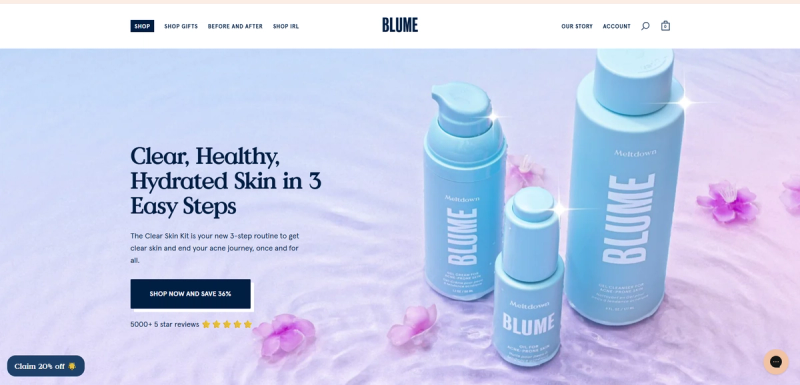
Strategic Approach
Blume activated smaller creators who had strong niche audiences. They emphasized authenticity over volume and encouraged affiliates to produce content that felt natural.
Importantly, Blume repurposed affiliate content into paid advertising campaigns.
Why It Worked
Affiliate content became both a traffic channel and a creative engine. The brand reduced content production costs while improving paid ad performance.
Affiliate marketing was not isolated. It was integrated into broader marketing systems.
Implementation Strategy
Build a process where you:
- Track which affiliate posts convert best.
- Request usage rights for high-performing content.
- Test that content in paid advertising campaigns.
- Increase commission or bonuses for affiliates whose content scales.
This turns affiliates into performance partners, not just traffic sources.
Core Structural Principles Behind Successful Affiliate Programs
Across these brands, several structural patterns appear consistently.
Clear Compensation Structure
Affiliates need clarity on:
- Commission rate
- Cookie duration
- Payout timing
- Performance tiers
Ambiguity discourages participation.
Active Recruitment and Vetting
Successful brands do not wait passively for signups. They identify and recruit aligned creators intentionally.
Performance Monitoring
High-performing affiliate programs monitor:
- Revenue per affiliate
- Conversion rate
- Average order value
- Refund rate
Inactive affiliates are removed. Top affiliates are rewarded.
Margin Discipline
Before scaling affiliates, brands calculate:
- Gross margin
- Fulfillment costs
- Payment processing fees
- Refund exposure
Affiliate growth only scales when unit economics are healthy.
Implementation Blueprint for Shopify Store Owners
If you want to build a serious affiliate engine inside your Shopify store:
- Confirm your margins support commission payouts.
- Select a Shopify affiliate app with reliable tracking and reporting.
- Start with curated outreach rather than public signup.
- Offer tiered incentives to encourage performance growth.
- Integrate affiliate efforts into email, product launches, and paid ads.
- Review performance monthly and adjust commissions strategically.
Affiliate programs require management. They are not passive systems.
Final Perspective
The Shopify stores that unlocked serious growth through affiliate marketing did not treat affiliates as a side experiment.
They built structured distribution systems.
They aligned incentives with margin.
They recruited intentionally.
They measured performance consistently.
And they integrated affiliate programs into their broader marketing infrastructure.
When executed properly, affiliate marketing becomes one of the most scalable and cost-efficient growth channels available to a Shopify brand.
When executed casually, it becomes a forgotten feature in your app dashboard.
Structure determines outcome.
Sources
Frequently Asked Questions
Is affiliate marketing worth it for Shopify stores?
Yes, when structured properly. Affiliate marketing is one of the few acquisition channels where you only pay when revenue is generated. For Shopify brands looking to reduce reliance on paid ads, a well-managed affiliate program can become a scalable and cost-efficient growth channel.
How long does it take for an affiliate program to generate revenue?
Most Shopify affiliate programs follow this timeline: Month 1: Setup, recruitment, onboarding Weeks 2–6: First affiliate-driven sales Months 3–6: Consistent revenue begins forming Affiliate marketing is not instant like paid ads, but once established, it compounds and becomes more predictable over time.
What commission rate should I offer affiliates?
Most ecommerce brands offer: 10–20% commission per sale Higher tiers for top performers Bonuses for hitting volume milestones The right commission depends on your margins. The goal is to make your offer attractive enough that creators prioritize your product over others.
What’s the best affiliate app for Shopify?
The best platform depends on your store stage: UpPromote – Best for startups and budget-conscious brands Social Snowball – Best for turning customers into affiliates automatically Refersion – Strong reporting and multi-structure programs Impact – Enterprise-level scaling The platform matters less than how actively the program is managed.
How do I recruit affiliates for my Shopify store?
High-performing brands don’t wait for affiliates to apply. They: Reach out to YouTubers ranking for product-related keywords Contact niche bloggers reviewing similar products Activate existing customers post-purchase Engage micro-influencers in their category Use affiliate marketplaces strategically Consistent outreach is what separates stagnant programs from scalable ones.
Why do most Shopify affiliate programs fail?
Common reasons: No active recruitment Low commission incentives No onboarding or communication Sending traffic to generic homepage No integration with email and retention Affiliate marketing fails when treated passively.
Is affiliate marketing better than influencer marketing?
Affiliate marketing is performance-based. Influencer marketing is typically flat-fee based. Affiliate programs reduce risk because you only pay when sales occur. Many brands combine both, but affiliate partnerships are often more sustainable long term.
Can affiliate marketing replace paid ads?
Not immediately. But over time, affiliate marketing can reduce dependency on paid acquisition by creating a distributed network of partners sending qualified traffic. The strongest ecommerce brands use paid ads for scale and affiliates for long-term efficiency.
Do affiliate customers have higher lifetime value?
Often yes. Customers who purchase through trusted creators or educational content tend to: Convert at higher rates Show stronger retention Have higher initial trust This depends on how well affiliate traffic is integrated into email and post-purchase systems.
How much revenue can affiliate marketing generate?
Well-structured programs can generate: 10–30% of total revenue for many DTC brands Even higher percentages in niche categories Results depend on recruitment effort, commission structure, and content alignment.
Ready to Turn Affiliate Marketing Into a Real Revenue Channel?
Most Shopify brands already have the pieces: customers, traffic, and a product people like. What they don’t have is a structured affiliate system that consistently brings in new customers without increasing ad spend. That’s where we come in. We help Shopify brands build affiliate programs that actually produce revenue by installing the right infrastructure from day one: Platform setup and tracking configured correctly Commission structures that attract serious partners Creator and customer recruitment systems Landing pages and assets that convert Email and retention integration so every new customer compounds When affiliate marketing is built properly, it stops being an experiment and becomes a predictable acquisition channel that grows over time. If your store already has traction and you want to scale without relying entirely on paid ads, we should talk.
