Why Influencer Marketing doesn't work
Most brands blame their brief, their product, or the influencer. The real problem is expecting something the channel was never designed to deliver.
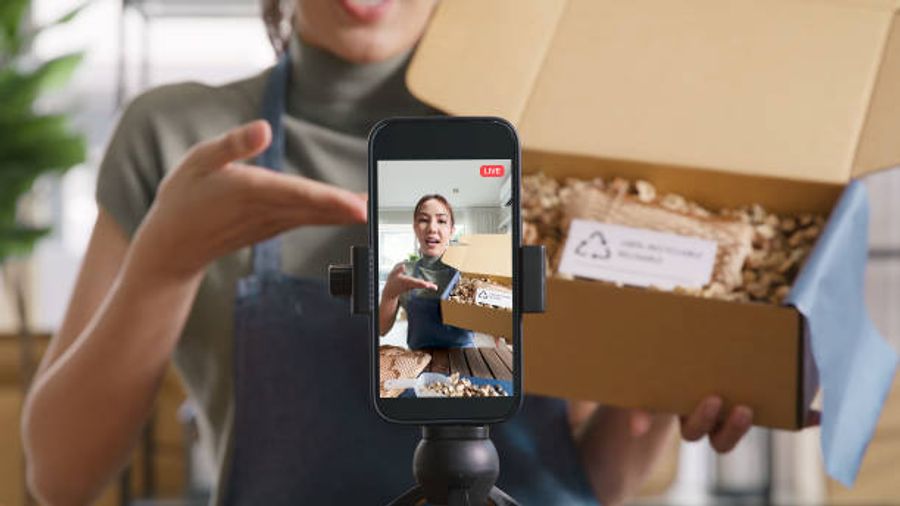
You sent free products to influencers. You got one story post and silence. You spent real money and saw zero return.
Before you try again with a better contract or a tighter brief, you need to understand something the influencer marketing industry does not want to tell you. The problem is probably not your execution. It is your expectations.
66The real conversion numbers from a single influencer post
Most influencers have an engagement rate between 1 and 5 percent. That means for every 10,000 followers, between 100 and 500 people are actively engaging with their content.
Of those people who engage, studies consistently show that between 1 and 3 percent take any kind of purchase action. That means on a 10,000 follower account you are looking at one to fifteen people potentially clicking through to your store from a single post. Of those, your store converts at roughly 1.4 percent on average.
Do the math. A single post from a 10,000 follower influencer will statistically generate zero to one sales on average. Not because the influencer is bad. Because that is what the numbers produce.
A 50,000 follower account does not fix this problem. It scales it slightly. You are now looking at five to seven sales from a single post under optimistic assumptions. That is not a profitable acquisition channel for most Shopify stores. Your product cost, your shipping cost, and the time you spent sourcing and managing that relationship almost certainly exceed the revenue generated.
This is why so many brands feel burned by influencer marketing. They were not doing it wrong. They were expecting something the channel is not designed to deliver at small scale.
The 80/20 problem that nobody is telling you
Here is the most important thing to understand about influencer marketing at any scale. Typically around 5 to 10 percent of the creators you work with generate over 80 percent of whatever revenue the campaign produces. The rest generate almost nothing regardless of how well you brief them, how good your product is, or how engaged their audience appears.
This is not a vetting problem. It is a statistical reality of the channel.
What this means practically is that if you work with fifteen influencers you can expect one or two of them to produce something measurable and thirteen of them to produce almost nothing. The problem is you have no reliable way to know in advance which one or two those will be. You find out after you have already shipped the product and waited for the post.
This is why brands with real budgets and dedicated influencer teams work with dozens or hundreds of creators simultaneously. They are not expecting each one to perform. They are running enough volume that the 5 to 10 percent who do perform generate enough revenue to justify the entire programme. That model does not work at fifteen influencers. It starts to work somewhere around fifty to one hundred and becomes reliable at two hundred plus.
For most small Shopify stores this is not a realistic operating model. You do not have the budget, the team, or the bandwidth to run a programme at the volume required to make individual-post direct sales ROI work.
Why the industry keeps telling you it works
Just 30 percent of marketers consider sales a measure of success when evaluating the ROI of their influencer campaigns. Engagement rate, reach, and brand lift are easier to track and more important to influencer marketers because increased brand recognition can lead to more resilient brand loyalty over time. Shopify
Only 30 percent of brands are measuring whether influencer campaigns actually generate sales. Everyone else is measuring impressions, reach, and engagement. These metrics are easy to report, look good in presentations, and feel like progress. But impressions do not pay for the products you shipped or the time you spent managing the campaign.
Influencer marketing often operates outside traditional ROI metrics. Its impact can vary widely based on the platform, audience type, and campaign objectives. This makes it difficult to establish benchmarks or compare influencer results with other digital channels. Measurement tools and systems just really haven't caught up. eMarketer
The channel is genuinely hard to measure cleanly. Attribution is complex. A customer might see your product in an influencer's story on Tuesday, search your brand on Thursday, click a Google ad on Saturday, and buy through an abandoned cart email on Sunday. The influencer influenced the purchase. The influencer gets zero credit in your attribution reports. You conclude the campaign failed.
This attribution gap is real and it systematically underreports the impact influencer marketing has on your overall acquisition funnel. But it also means that anyone telling you influencer marketing reliably delivers direct, trackable sales ROI from individual posts is not being honest with you.
What influencer marketing is actually good for as a small brand
Influencer marketing is not a direct sales channel for most small Shopify stores. It is a trust and awareness channel and a content production channel. Understanding the difference changes everything about how you approach it.
As a trust channel, an influencer your target customer follows recommending your product does real work. Not because that customer buys immediately from the story. Because when they encounter your brand again through a retargeting ad, a Google search result, or a word of mouth recommendation, they already have a frame of reference for who you are. That prior exposure makes every subsequent touchpoint more likely to convert. You cannot directly measure this. But it is real and it compounds over time.
As a content production channel, this is where the measurable ROI actually lives for brands at your scale. Ads featuring user generated content generate four times higher click-through rates and cost 50 percent less per click compared to standard branded ads. Influee Ads with UGC have four times higher click-through rates and cost 50 percent less per click compared to branded ads because viewers feel like they are getting recommendations from real people not polished sales pitches. Insense
The content a creator produces showing your product in a real, authentic context is more valuable as a paid ad than almost anything a professional studio will produce for you. Not because it is higher quality. Because it does not look like an ad and consumers respond to it differently.
When you pay a creator $200 to produce a sixty second authentic video of themselves using your product and you then run that video as a paid Meta or TikTok ad, you can directly measure the CTR improvement and cost per click reduction versus your standard creative. That is measurable ROI. That is a number you can put in a spreadsheet and justify.
67The two ways to use influencer marketing
Option 1: Gifting at volume to find your one or two performers
Accept that most creators you gift to will generate nothing. The goal is not to get a sale from each one. The goal is to find the creator or two whose audience responds to your product in a way that generates real engagement, real questions in the comments, and real clicks.
When you find them, those are the relationships worth investing in. Pay them for ongoing posts, give them an exclusive code worth promoting, build a genuine long-term relationship. Those one or two creators who actually convert can be worth more than everything else in your marketing budget combined.
To make this work you need to be gifting consistently, not once. This is a volume game at the discovery stage and the brands treating it like one find their winners faster.
Option 2: Pay for content, not for posts
This is the model with the most predictable return for small brands right now. Find five to ten creators in your exact niche, not broad lifestyle influencers, and pay them a flat fee of $150 to $300 each to produce a specific piece of authentic video content showing your product. You own the content rights. You do not need or expect them to post it to their audience.
You take that content and run it as a paid ad. You test which of the five to ten videos performs best. You scale budget behind the winner. You brief more creators on the same format.
This is not influencer marketing in the traditional sense. It is paid UGC production. But it uses the same creators, produces the same authentic content, and delivers returns you can actually measure because the distribution is happening through your paid ads where attribution is clean.
The niche alignment issue that is killing most small brand campaigns
The Reddit thread this article was inspired by describes a brand selling belts and keychains made from retired climbing rope. That product has a clear, specific, passionate audience: climbers, outdoor gear people, the sustainability and upcycling community.
Sending that product to generic lifestyle influencers with 20,000 followers and a vague outdoorsy aesthetic is not influencer marketing. It is sending free products to people whose audience has no particular reason to care.
A 4,000 follower dedicated climbing content creator whose entire audience is people who think seriously about gear decisions is not comparable to a 40,000 follower outdoor lifestyle account whose audience likes beautiful mountain photos. One of those is a community of potential buyers. The other is an audience of people who look at nice pictures.
The creator whose audience is your exact customer converts at a fundamentally different rate because the recommendation carries credibility and context that a generic lifestyle feature cannot replicate. Their followers do not just see a product. They see a recommendation from someone who has the same specific relationship to the activity that they do. That is a completely different trust signal.
Before you work with another influencer, ask one question: does this creator's audience actually do or care about the thing my product is for? Not adjacent to it. Not vaguely related to it. The exact thing. If the answer is anything other than yes, the campaign is unlikely to produce meaningful sales regardless of how many followers they have.
How to actually measure whether any of this is working
Stop measuring story views and engagement rates as success metrics. These numbers feel meaningful and are almost entirely disconnected from revenue.
What to measure instead:
Track your direct traffic on the days after a post goes live. A spike in direct traffic correlating with a post is a sign the content drove branded searches even if no one clicked the affiliate link.
Track your branded search volume in Google Search Console over the weeks following a campaign. An increase in people searching your brand name is the clearest signal that awareness activity is working.
Give every creator a UTM-tagged link, not just an affiliate code. Track where that traffic goes, how long they stay, and whether they return within thirty days. Many influencer-influenced purchases happen a week or two after the initial exposure, not in the same session.
If you are running paid ads alongside an influencer campaign, track whether your retargeting CPAs drop during and after the campaign period. Lower CPAs from warmer retargeting audiences is a direct downstream effect of effective awareness activity that most brands completely miss.
For UGC content being run as paid ads, measure the CTR and CPC against your existing branded creative in a direct A/B test. If creator-produced content is generating significantly higher CTR at lower cost per click you have a clear, attributable ROI number.
The honest answer to whether you should do influencer marketing
If you are expecting individual posts to reliably generate direct sales that clearly exceed what you spent on the relationship, the honest answer is that this is unlikely to be the experience you have. Not because you are doing it wrong. Because the channel does not work that way at small scale.
If you are willing to use it as a long-term awareness channel where the returns compound slowly and are difficult to attribute precisely, or as a content production model where you pay for assets you then use in paid media, influencer marketing can be genuinely valuable.
The brands winning with this channel are not the ones with the best influencer vetting system. They are the ones who stopped expecting influencer marketing to be something it is not and started using it for what it actually does well.
