SEO vs Paid Ads for Shopify: Which Should You Start With?
A step-by-step system to validate your offer, generate sales fast, and scale with confidence

Every store owner faces the same question.
Do I spend money on ads or invest time in SEO and organic?
Most choose organic first because it feels safer. No spend, no risk, just content compounding over time.
That strategy is backwards. And it costs stores months of momentum they cannot get back.
01The honest truth about SEO
SEO is real. The returns are real. Strong organic rankings generate traffic that only costs time and compounds daily.
But here is what nobody tells you:
- SEO takes 12 to 24 months to produce meaningful results for a new store
- Google needs time to index content, build domain authority, and understand your site
- You need enough content ranking for enough terms to drive enough traffic to matter
- There is no shortcut to this timeline
The store owner with 50,000 monthly visitors from old SEO is not an argument for starting with SEO. They are an argument for having started SEO years ago.
During those 12 to 24 months you still need sales. You still need to pay for inventory. You still need to know whether your product and offer actually convert.
SEO tells you none of that while you are waiting for it to work.
What paid ads give you that organic cannot
One thing. Speed.
Within 48 to 72 hours of launching a paid campaign you have real data:
- Are people clicking your ads
- Are they buying when they land on your page
- Which angle and hook resonates
- Which product is getting attention and which is not
That information is worth more than any amount of SEO content at the early stage because it tells you whether your business actually works before you invest months into it.
Every store that has scaled with paid and then added SEO followed the same logic:
- Use paid to prove the offer converts
- Use paid to understand your customer
- Use paid to generate revenue that funds organic content
- Build SEO on proven messaging rather than guessing
But paid ads are expensive
They are expensive when you do not have a system.
When you do have a system they are the most controllable, scalable, and measurable channel available.
Most store owners feel burned by paid ads because they ran ads before they understood what to test, how to read the data, and how to fix what was not working. They spent $500, saw no return, decided ads do not work, and went back to posting on Instagram.
The ads were not the problem. The lack of a system was.
02The paid ads system that actually works
There are four parts. Most brands only think about one or two and wonder why results are inconsistent.
Ideation: finding what to say before you spend a dollar
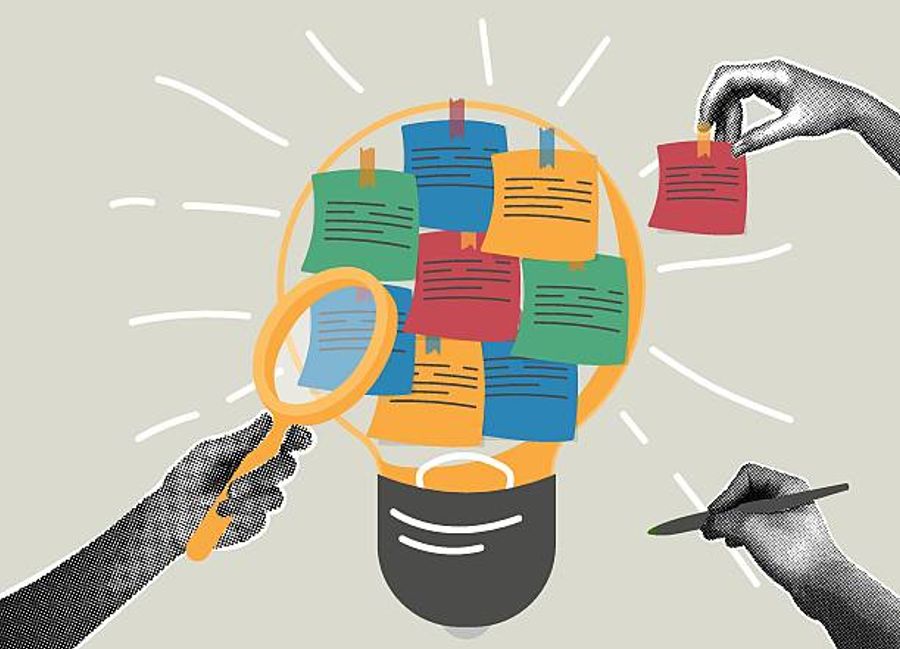
The biggest mistake brands make is writing creative based on what they think sounds good.
The copy that converts is almost never invented. It is found.
Before writing a single ad do these five levels of research:
Your product
Understand every feature, what each feature does, and what benefit that creates for the buyer.
The iPod was not advertised as having 80 megabytes of storage. It was advertised as 1,000 songs in your pocket. The feature was 80 megabytes. The benefit was 1,000 songs in your pocket.
Most brands are still writing the 80 megabytes version of their own ads.
Competitor research
Go to Amazon and read the one, two, and three star reviews of the top products in your category.
Every complaint is a positioning opportunity. If every competitor's supplement is giving people anxiety, your angle is the one that does not. You found that for free in the reviews.
Cross-niche research
The best ad ideas often come from completely unrelated categories. A hook working in the supplement space might be exactly what nobody in the clothing space has tried yet.
Look at what is scaling in adjacent categories and bring those creative approaches to your niche.
Customer surveys
Ask your existing customers three things:
- Why did you buy
- What almost stopped you
- What do you love about it
Their exact language in their answers is your ad copy. Do not paraphrase it. Use it word for word.
Reddit and YouTube comments
Search your product category on Reddit. Read what real people are saying about the problem your product solves. The way they describe their frustration is the hook for your next winning ad.
One brand found a comment from a first-time mother saying she lost her phone while it was in her hand. That single comment became the emotional hook for an entire ad campaign.
Creation: what to actually make
Once you have an idea, every ad concept should produce:
- 3 videos or 3 photos
- Same text hook on all three
- Different visual hook on each one
This gives you three chances for the same idea to work. One visual hook might outperform the others by ten times. You would never know if you only made one version.
For video ads the formula is simple:
- Hook in the first 3 seconds that creates curiosity or calls out a specific problem
- Body that introduces the product as the solution with clear benefit-driven language
- Close that either highlights the offer or gives a specific result the customer can expect
For the Sima shower towel brand analyzed in our research, their best performing hook was: "This came off my skin after one shower." That single line creates enough curiosity that most people cannot scroll past it. They have to know what it is.
Notice what that hook does not do. It does not say the product name. It does not list features. It does not use the phrase game changer. It creates a question in the viewer's mind that can only be answered by watching more.
That is what a good hook does.
What kills ads before they start:
- Vague language like game changer or life changing without explaining why
- Starting with the product name before creating any curiosity
- Listing features instead of showing outcomes
- Ads that look like ads. Authentic UGC style content outperforms polished branded creative because viewers cannot immediately identify it as an ad
The three funnel stages and what creative each needs:
Top of funnel — people who have never heard of you:
- Lead with curiosity or a problem they recognise
- Introduce the product as the solution
- Show the outcome clearly
Middle of funnel — people who have seen your ads but not bought:
- Testimonials and social proof
- Address the most common objection
- Show results not features
Bottom of funnel — people who visited your store but did not buy:
- No need to explain the product again
- Lead with the offer: discount, free gift, limited time
- Keep it short and direct
Ad account structure: keep it simple
Most brands over-complicate their ad account structure. Simple outperforms complicated every time.
The structure that works:
- One CBO campaign per business goal
- One ad set per creative idea
- Three ads per ad set with different visual hooks
- Let each ad run for 7 days before making decisions
Do not touch it daily. Do not pause ads after 24 hours because they are not performing. Give the algorithm time to find the right audience for each creative.
How to scale when something works:
When your cost per acquisition hits your target:
- Increase the campaign budget by 20 percent
- Do this based on yesterday's performance if results are stable
- Do this based on the last 7 day average if results are volatile
Do not jump budget by 50 or 100 percent. Incremental increases protect performance while still scaling.
How to diagnose when something does not work:
If cost per link click is high: → Creative problem. The ad is not compelling enough to make people click.
If cost per link click is good but cost per purchase is high: → Landing page problem. The ad promised something the page does not deliver.
If CPM is very high: → The ad is resonating with too small a group of people or the platform is penalising poor creative quality.
Learn the part most brands skip entirely
This is where consistent improvement comes from and almost nobody does it properly.
After every ad runs for 7 days answer three questions:
- What went right
- What went wrong
- What would we change
Do this even for winning ads. Even for losing ads. Document everything.
Over time this builds a picture of what works for your specific product, your specific audience, and your specific market. That accumulated knowledge is what separates brands that consistently find winning ads from brands that occasionally get lucky with one.
The brands generating consistent returns from paid ads are not smarter or luckier. They have run this system more times than everyone else and they have documented what they learned from each iteration.
When to add SEO and organic on top
Once paid ads are working and you have proven your offer converts, that is when organic and SEO start to make sense.
Now you know:
- Which angles your audience responds to
- What language they use to describe their problem
- Which benefits drive the purchase decision
That is your SEO keyword strategy. That is your content calendar. That is your social media angle.
You are not guessing anymore. You are scaling messaging that you already know converts into channels that cost less over time.
Paid first. Organic second. In that order.
Paid ads rent attention while you learn. Organic builds attention that you own forever. You need both but you need them in the right sequence.
The short version
Do not spend 12 months on SEO hoping traffic converts before you know your offer works.
Spend 90 days on paid ads and find out exactly what converts, who is buying, and what they respond to.
Then build your organic content strategy on top of a foundation that already has proof behind it.
That is the order that works.
Frequently Asked Questions
How long does it take for SEO to work for a Shopify store?+
Should I focus on SEO or paid ads first for my Shopify store?+
Why is my Shopify store not getting sales even with traffic?+
Most stores don’t have a conversion system. This means weak product pages, unclear messaging, lack of trust signals, and no structured funnel. Traffic alone does not generate sales — conversion does.+
Why do most Shopify stores fail with paid ads?+
How much should I spend on ads to test a product?+
Why am I getting clicks but no purchases?+
What makes a high-converting Shopify product page?+
How do I find winning ad ideas?+
Can SEO replace paid ads?+
If your store isn’t converting, more traffic won’t fix it.
Get the system to test, optimize, and scale what actually makes money.
