Shopify Email Marketing: How to Increase Revenue From Your List
How ecommerce brands use unconventional email design, subject lines, and content to stand out, increase engagement, and drive measurable revenue.

01Stop Sending Boring Emails
Your subscribers aren't ignoring your emails, they're just not noticing them because every email in their inbox looks, sounds, and feels exactly like yours. Same promotional banner. Same subject line formula. Same bold CTA button centered above the fold. Their brain has filed your sends under "Another promotion, I don’t want to buy right now" which means never.
The average email click-through rate across all industries is 2.09%. That means for every 1,000 people you're paying to acquire, nurture, and retain on your list, fewer than 21 actually click through on any given send. Source: MailerLite, 2025. The problem isn't your product. It's not your offer. It's that you're blending into the noise.
02What is a Pattern Breaker?
Pattern breakers fix that. Borrowed from neuro-linguistic programming and adopted by the best direct response marketers in the world, a pattern break is any deliberate deviation from what a reader expects in format, tone, subject line, design, or content that snaps them out of autopilot and forces genuine engagement. When it works, the results aren't marginal. They're dramatic.
This article breaks down seven types of email pattern breakers, shows you exactly how real ecommerce brands are using them to drive higher click-through rates and more revenue, and gives you a framework for testing them in your own flows.
Why Your Inbox Looks Like Everyone Else's
Before getting tactical, it’s worth understanding why the problem exists at all. Email marketing has been around long enough for subscribers to develop what behavioral scientists call a predictive model of promotional emails. Open an inbox today and you’ll see the same structural DNA repeated across almost every brand message: a hero image, a headline, a paragraph of copy, a CTA button, and a footer with social icons. It’s become so universal that readers don’t actually read it, they pattern-match it and move on.
The brain is wired for novelty and threat detection, not for processing expected information. When something appears in the inbox that breaks the template, like an unusual subject line, an email with no images, or a message structured like a text from a friend, the brain flags it as worth attending to. That flagging is the click.
Part of the problem is lazy email marketing tactics. Many brands assume they can simply stamp a promo code or deal into an email and expect subscribers to flood to their site. In today’s landscape, with so many options competing for attention and people constantly bombarded with SMS, emails, social media, and endless scrolling, that approach rarely works. Email campaigns need to stand out. Design, angle, and creativity matter more than ever. Brands that consistently produce high-quality marketing content, carefully crafted from both the owner’s perspective and the subscriber’s experience, are the ones that cut through the noise.
Pattern breakers work on both stages:
- They get more people to open the email through subject line surprises
- They get more of those openers to click through with in-body surprises.
When used systematically, they compound into meaningfully higher click-through rates and directly measurable revenue impact. Investing time in your email campaigns to make them pop and stand out is no longer optional, especially if your goal is to win back one-time buyers or re-engage a dormant audience.
Pattern Breaker #1: The Plain Text Email
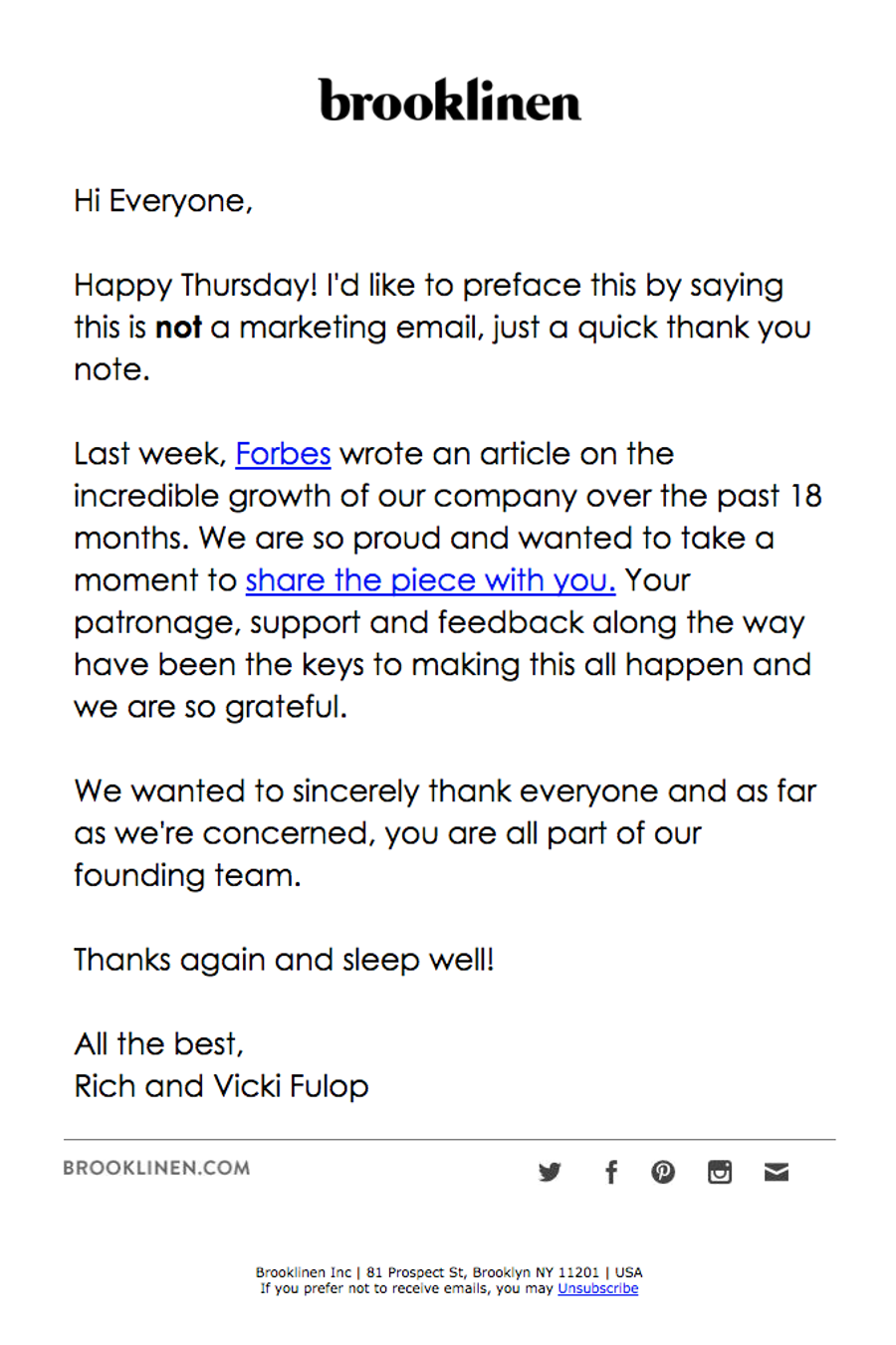
In a world of polished HTML templates, the most disruptive email you can send is one with no design at all. No hero image. No brand colors. No CTA button. Just words on a white background, the kind of email a real human being would write to another real human being.
Braxley Band, a Shopify watchband brand, uses a plain text email as the first touchpoint in their abandoned cart flow sent from a named member of the support team, written in a warm and human tone, with no images and no design. It converts around 20% of abandoned carts. The reason is simple: it doesn't feel like a marketing email, so it doesn't trigger the mental filter that promotional emails do. Source: Fuel Made.
Graza, the squeezable olive oil brand with a cult following, uses plain text emails in a way that feels entirely native to their brand voice with specific, personal, and slightly absurd messages. One of their back-in-stock emails features a highly specific product quantity ("we have exactly 847 bottles left") and a CTA so casual and funny it gets shared on social media. Source: Siimpettai, 2026. The specificity makes the scarcity feel real. The tone makes it feel like a tip from a friend, not a sales alert.
A separate A/B test run on a client's abandoned cart flow by email operator Sii Mpettai found that a plain text email converted 2x better than the same brand's visually designed template for the same cart abandonment use case. The more a subscriber believes a real person wrote the email specifically for them, the more likely they are to respond to it.
Where to Use It Plain text Emails
Use this tactic where a personal connection matters more than a polished brand presentation:
- Abandoned cart flows – especially the first email
- Win-back sequences – re-engage one-time buyers
- Customer service check-ins – make interactions feel personal
- VIP or loyalty touches – show your best customers they’re valued
- Founder story emails – share your story in your own voice
Pattern Breaker #2: The Absurdist Subject Line
The subject line is your first chance to stand out and it’s the bridge between the inbox and the open. Most brands waste it on predictable formulas that get drowned out by the tens of other marketing emails such as:
- "Your exclusive offer inside"
- "Last chance for 20% off"
- "Don’t miss this"
- “One day left for our Spring Sale”
These lines are so overused that subscribers tune them out as background noise before finishing the sentence.
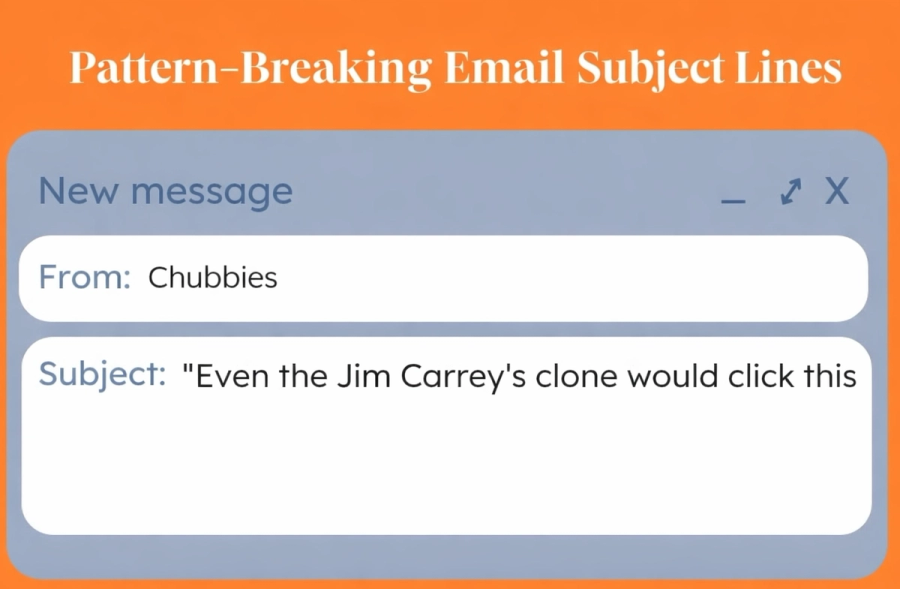
Chubbies, the men's shorts brand, has built one of the most studied email programs in DTC ecommerce almost entirely on the strength of their pattern-breaking subject lines. Their Black Friday campaigns are industry case studies: absurdist subject lines paired with matching sender names that make the joke start before the email is even opened. The brand created their own holiday "Thighber Monday" as an owned cultural moment that their subscribers look forward to every year. Source: Drip.
The mechanism at work is simple but powerful: humor breaks autopilot. When a subject line makes you smile or more importantly, makes you confused for half a second your brain is forced to allocate attention to process it. That half-second is the window between the scroll and the open. Chubbies earns it every single time.
Other proven subject line pattern breaks include:
- The incomplete thought: "We need to talk about..." or "This is awkward, but..." signals vulnerability and creates an information gap.
- The math symbol: Using ≠, =, or + in a subject line breaks the visual pattern of an all-text inbox scan. A subject line with an equation symbol stops the eye where a sentence wouldn’t.
- The single word: "Oh." or "Wait.", so short it creates cognitive dissonance in a field of long promotional lines.
- The honest meta-comment: "This is a marketing email, but hear me out" uses self-awareness as a disarm.
- The customer call / segmentation: Tailor the line based on purchase behavior, e.g., "I guess you don’t like us huh?", personalized for someone who hasn’t made a purchase.
- Trendy / Social Media: "Even the Jim Carrey’s clone would click this"
- Shock / Provocative: “Screw it here’s your f#@cking discount code”
The Rule for Pattern-Breaking Subject Lines
- Deliver on curiosity: your subject line promises attention; your email must follow through.
- Earn the open: the subject line grabs the reader.
- Earn the click and trust: the email content keeps it.
- Avoid empty clickbait: failing to deliver trains subscribers to ignore future emails.
Pattern Breaker #3: The Curiosity Gap Email
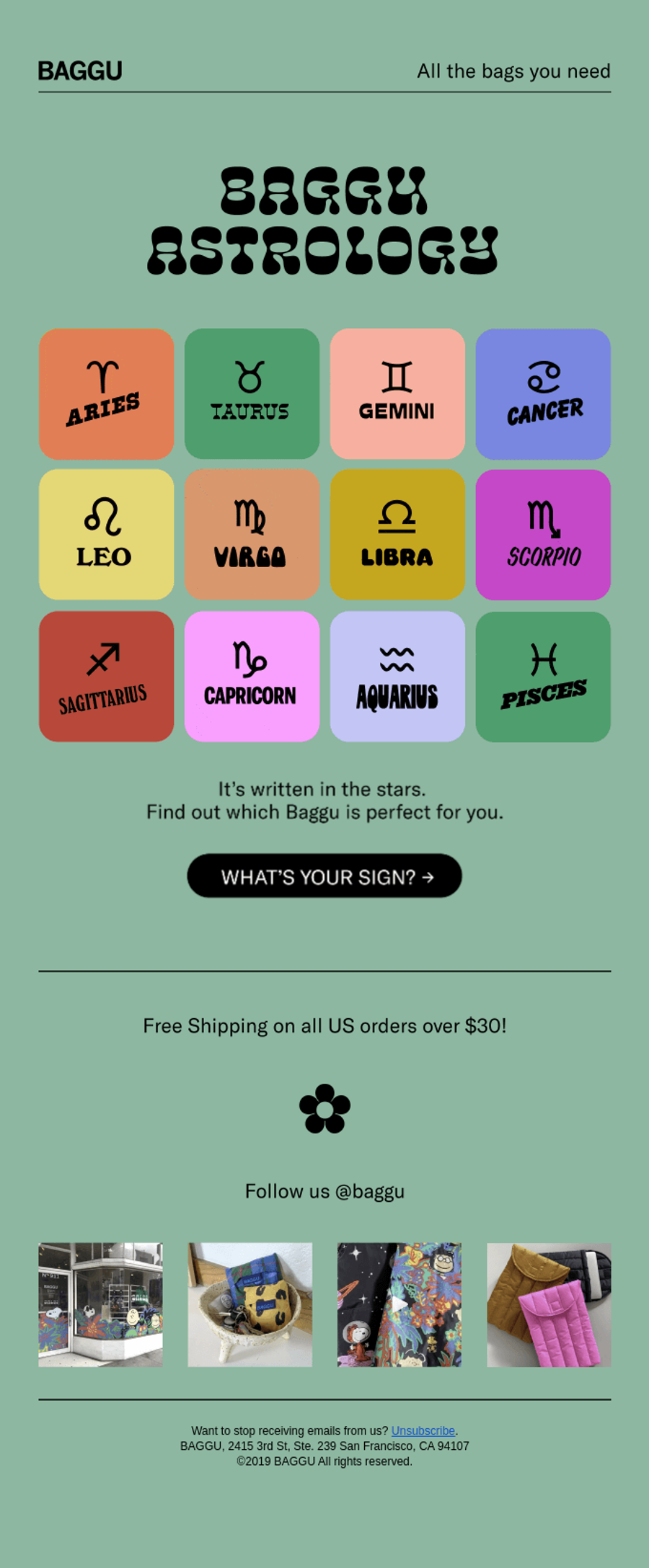
The curiosity gap is one of the most psychologically grounded tactics in all of copywriting. Coined in George Loewenstein's 1994 research on the psychology of curiosity, the information gap theory holds that when people are aware they're missing information they want, the discomfort of not knowing drives them to seek it out. In email, that means structuring your subject line and your email body so that resolution requires a click.
Glossier executed one of the most discussed curiosity gap emails in ecommerce. Rather than sending a promotional email, they sent their most engaged subscribers a single message: "You look good." No products. No offer. No explicit CTA. Just a compliment. The catch every image, button, and icon in the email linked directly to their product pages. By not selling anything, they made subscribers click everything. Source: Drip.
Recess, the calm-inducing seltzer brand, used an elongated cat graphic that deliberately obscured part of their email copy leaving readers intrigued enough about what was hidden that they visited the site to find out. The entire email was designed around incompleteness. Source: Stripo. The click wasn't earned by the offer it was earned by the gap.
Graza executed the same mechanic with their product recommendation flowchart email. It opens with the question "Do you have a mouth?" including a "No" option for comic absurdity and winds through increasingly ridiculous choices before landing on a product recommendation. The email is a game. The click is the prize.
1. Pick the Hook
- Identify what your subscriber wants to know:
- A result ("How we doubled conversions")
- A secret ("Unlock your mystery gift")
- A reveal ("Who won our giveaway")
- A ranking ("Top 5 best-selling products")
2. Structure the Email
- Tease the answer without giving it away
- Make the setup genuine and specific
3. Drive the Click
- The curiosity gap creates the need to click
- The landing page delivers the promised answer
4. Build Trust
- Always fulfill the promise you teased
- Curiosity gets attention; delivery earns confidence
Pattern Breaker #4: The No-Sell Email

One of the most counterintuitive revenue-generating emails you can send is one that explicitly doesn't try to sell anything. The logic sounds backwards until you understand what it's actually doing: it's training your list to open your emails even when they don't expect an offer which means when you do make an offer, your open rates are higher because subscribers have learned that your emails are worth reading regardless.
Wool and the Gang uses emails that look and read like messages from a close friend with subject lines that open mid-conversation, body copy that sounds like a text message, and content that prioritizes the relationship over the transaction. According to Drip, this conversational approach drives engagement precisely because it breaks the mental filter subscribers apply to promotional emails.
Tecovas, the western boot brand, sends occasional founder letters with plain text, a personal tone, no products, no links that talk about the brand's story, their craft, and their year. No selling. The emails exist purely to maintain and deepen the relationship. The commercial payoff is indirect: subscribers who feel connected to a brand open their promotional emails at higher rates and convert at higher rates when they do. Source: Klaviyo.
Where to Use No-Sell Emails
- Mid-sequence relationship builders: between promotional sends
- Re-engagement flows: rebuild trust before making an offer
- Post-purchase follow-ups: nurture the customer after buying
- Brand story moments: content without a product hook
The no-sell email is a long-game play, it pays off in every email you send afterward.
Pattern Breaker #5: The Personalization Pattern Break
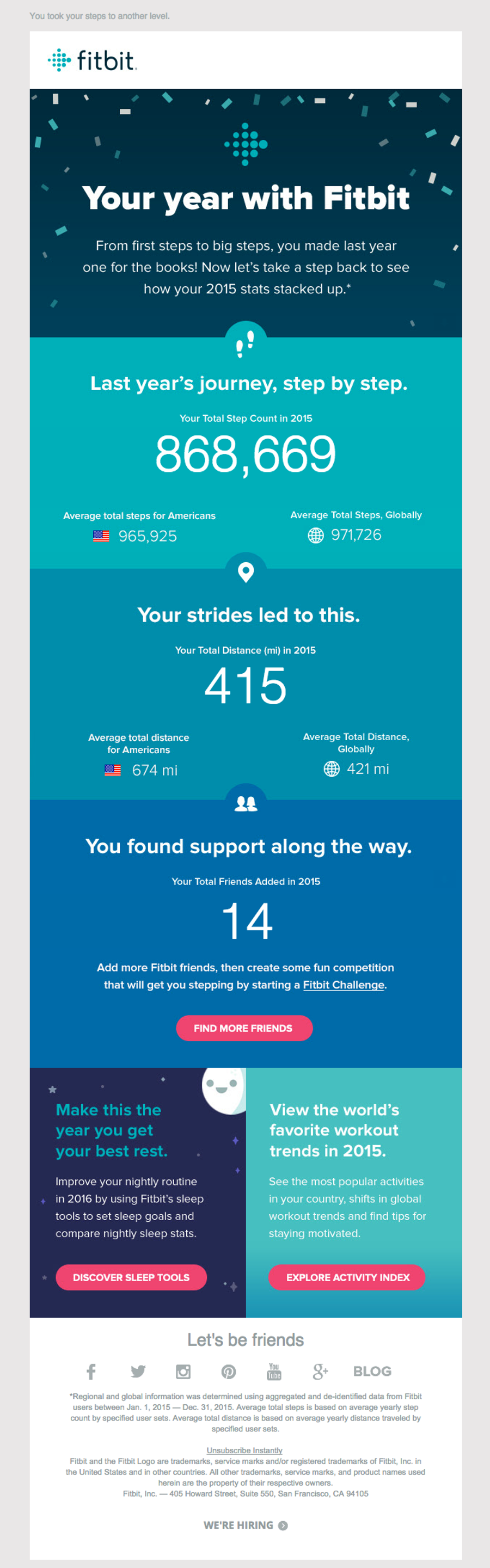
Personalization in email used to be a pattern break when putting someone's first name in a subject line was enough to make them stop. In 2026, that bar has moved dramatically. First name personalization is so universal that it's become part of the template subscribers scan past. Real personalization pattern breaks go deeper: they reference something specific enough to make the subscriber think the email was written for them alone.
Chubbies creates unique nicknames for each subscriber, not first names, but invented monikers that feel like something only a close friend would use. The effect is uncanny. Drip's analysis identifies this as one of the most sophisticated personalization tactics in consumer email: using a person's name is one thing, but creating a nickname unique to each reader is something else entirely. It signals genuine individual attention at scale.
Netflix and Spotify have built their entire email programs around behavioral personalization subject lines like "Sarah, a new series we think you'll love" or "Your personalized Discover Weekly playlist is ready" work because they reference what you actually consumed, not just who you are. Source: EmailGum. The pattern break is relevance so specific that it can't be generic.
For ecommerce brands, behavioral personalization looks like: referencing a specific product the subscriber browsed but didn't buy, acknowledging their purchase anniversary, calling out a category they repeatedly shop, or segmenting by location for geo-specific offers or events. The more specific the reference, the stronger the pattern break because specificity signals that a real person (or a very smart system) is paying attention.
The benchmark: a 10% impression click-through rate is considered exceptional across most marketing channels. In email, achieving it requires relevance and personalization so tight that the email feels built for one person rather than sent to a thousand.
Pattern Breaker #6: The Format Shock

Most email templates follow a vertical scroll architecture: hero image → headline → body copy → CTA. It's so standardized that readers unconsciously map it before they've read a word. Any significant departure from this structure creates a moment of cognitive recalibration so the subscriber has to actually look at the email rather than pattern-matching it to what they expect.
Format shock breaks include:
- The upside-down email: CTA at the very top, story below. Forces immediate action consideration before the sell begins
- The single sentence email: one line of copy and one link. Nothing else. The whitespace alone is a pattern break
- The broken template: a deliberately "glitched" design, a layout that appears to have a rendering error, or imagery that spills outside its container. The image obscures part of the copy, driving subscribers to the site to read the rest
- The all-lowercase email: lowercase subject lines and email copy feel less formal and less promotional. All-lowercase formatting alone can double response rates because it reads as human rather than corporate
- The reverse reveal: open with the punchline, close with the setup. Start with the result and make the reader scroll to understand why
The underlying principle is the same regardless of which format shock you use: friction that comes from unexpectedness is different from friction that comes from confusion. You want the reader to pause and look again, not to give up and close the email. Every format experiment should still communicate the core message clearly. The pattern break is the wrapper, not the content.
Pattern Breaker #7: The Radical Brevity Email
In an era of long-form content marketing, sometimes the most disruptive email you can send is the shortest one in someone's inbox. Three sentences. One link. A subject line that's four words. The brevity itself signals confidence. Brands that need five paragraphs to make their case are less certain than a brand that says everything in two lines and trusts the reader to click.
The "Justin Michael Method" is a sales outreach framework that strips emails down to their irreducible minimum: one observation, one question, one link.
Example:
"Heard your store gets traffic but not enough repeat buyers. Got a fix. Want details?" It's not polished. It's not branded. It's impossible to ignore.
For ecommerce brands, radical brevity emails work exceptionally well as:
- Flash sale announcements ("It's live. 4 hours only. Here →")
- Back-in-stock alerts for high-demand products
- Abandoned cart final follow-up after a longer sequence has run
- Re-engagement emails to dormant subscribers before removing them from the list
- New product drops for an engaged list that already trusts the brand
The brevity pattern break compounds well with plain text — a three-sentence email that looks like a text message is one of the highest-performing formats available for subscriber segments that have already been through a longer nurture sequence and need a different stimulus to re-engage.
03How to Test Pattern Breakers Without Burning Your List
Pattern breaking is not a license to be random. Every unconventional element in your email needs a deliberate reason to exist as the goal is to capture genuine attention, not create confusion that damages deliverability and subscriber trust.
Start with Your Subject Line, Not Your Template
The lowest-risk pattern break is at the subject line level. A/B test an unconventional subject line against your current formula on 10–20% of your list before rolling out. Measure open rate and click-to-open rate not just opens, which are increasingly unreliable due to privacy protections inflating recorded open rates. CTOR is the cleanest indicator of whether your content, not just your subject line, is driving engagement.
Test One Variable at a Time
If you change the subject line, the format, the tone, and the CTA simultaneously, you won't know what moved the needle. Run clean tests: one change per send. Plain text versus designed template. Absurdist subject line versus standard subject line. Brevity email versus full-length promotional email. Document every result and build a library of what works for your specific list.
Match the Pattern Break to the Use Case
Not every pattern break works in every context. A humorous absurdist subject line is perfect for a promotional campaign from a brand like Chubbies but it would be jarring from a premium menswear brand whose identity is built on restraint and elegance. A plain text email is powerful in an abandoned cart flow where you want to feel personal but it's less appropriate for a product launch announcement where design is part of communicating the product's quality.
Always Deliver on the Promise
The most important rule in pattern break email marketing: whatever curiosity, humor, or the expectation you create in the subject line is that the body of the email must deliver on it. A subject line that piques curiosity but opens to a standard promotional email destroys trust. The pattern break earns the open. The content earns the click. The delivery earns the next open.
The Revenue Case for Pattern Breaking
Every percentage point improvement in CTR is a direct revenue multiplier. Many email marketing professionals struggle with low click-through rates as their primary challenge. The brands that solve this problem don't spend more on their lists, they send better emails.
Consider the math. An ecommerce store with a 10,000-subscriber list, sending weekly campaigns at an average 2% CTR, generates 200 clicks per send. Lift that to 4%, the kind of improvement pattern breaks routinely deliver in A/B tests, and you're generating 400 clicks from the same list, same frequency, same ad spend. At a 3% purchase conversion rate from email traffic, the difference between 200 and 400 clicks is six additional sales per send, every week, from subscribers you already own.
Annualized across 52 sends: that's 312 additional transactions from your existing list. No new acquisition. No higher ad budget. Just better emails.
The brands that win in email marketing in 2026 are not the ones with the biggest lists. They're the ones whose subscribers look forward to their emails because their emails don't feel like every other email in the inbox. Pattern breakers are how you build that reputation, one send at a time.
Frequently Asked Questions
Why aren’t my subscribers opening my emails?+
What is a pattern breaker?+
How do pattern breakers improve email performance?+
What types of pattern-breaking emails exist?+
How do I test pattern breakers without losing my list?+
Why is this worth the effort?+
Can pattern breakers work for any brand?+
What’s the ultimate rule for pattern-breaking emails?+
Ready to Stop Settling for Ordinary?
Don’t let cookie-cutter websites or standard templates hold your brand back. With unlimited development, you get custom sections, integrations, and solutions that actually grow your business with no limits, no compromises. Your store, your systems, your growth that are built exactly the way you need it.
