Shopify Testimonials: How to Increase Conversions by 20%
How Shopify Stores Use Video Testimonials to Build Trust, Boost Conversions, and Drive Repeat Revenue

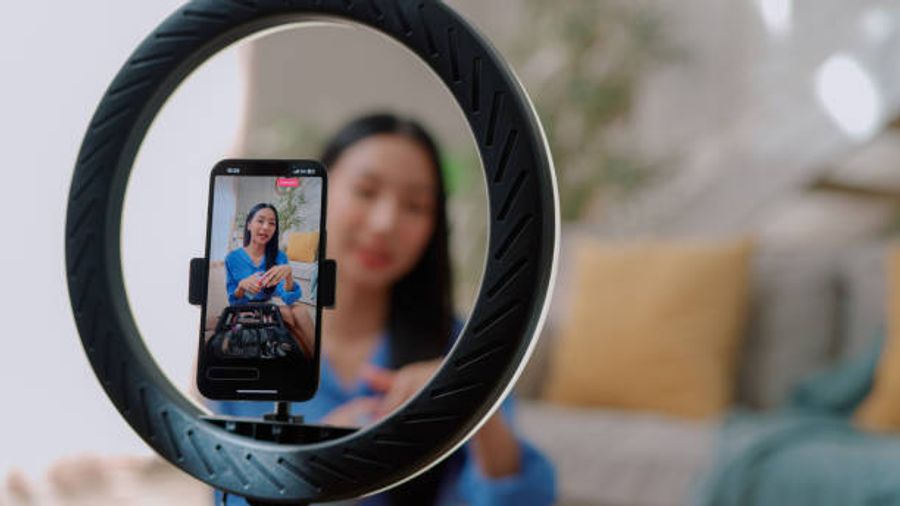
01Why Video Testimonials Have Become One of the Strongest Revenue Drivers for Shopify Stores
This article explains why video testimonials have become one of the highest-impact conversion and retention tools for Shopify brands and how thoughtful stores are turning customer stories into a repeatable revenue system. The focus here is practical implementation, real performance data, and how smaller stores can use testimonial content to improve trust and conversion without increasing ad spend.
In the early stages of an ecommerce business, most founders focus heavily on traffic. They look for more visitors, more impressions, and more reach. They invest in paid ads, social content, and search optimization. All of this matters, but many overlook the factor that determines whether traffic actually becomes revenue: trust.
When a customer lands on a Shopify store for the first time, they are not just evaluating the product. They are evaluating risk. They want to know if the product will arrive as described, whether the quality will match expectations, and whether the brand is legitimate. In physical retail this reassurance happens naturally. Online it must be constructed deliberately.
Video testimonials have become one of the most effective ways to create that reassurance and shorten the time it takes for a visitor to trust a brand.
02The business case for video testimonials
The effectiveness of testimonial video is supported by consistent ecommerce and marketing data. Research from Wyzowl shows that 79 percent of consumers say they have been convinced to purchase after watching a video. Testimonial-style videos rank among the most trusted forms of branded content because they feature real customer experiences instead of direct promotional messaging.
Additional research from BigCommerce and HubSpot shows that product pages featuring video content can see conversion increases of up to 80 percent compared with pages without video. While not all of that lift comes from testimonials alone, customer-led video content consistently ranks among the highest performing formats because it reduces perceived purchase risk quickly.
Controlled conversion tests run through VWO have shown landing pages with testimonial videos producing conversion increases of more than 30 percent compared with identical pages using only written reviews. Video compresses multiple forms of reassurance into one interaction. It shows tone of voice, context, usage, and emotional reaction all at once.
For smaller Shopify stores still building brand recognition, even a modest lift in conversion rate can significantly impact monthly revenue. Moving from a two percent conversion rate to three percent often represents thousands of dollars in additional sales once traffic stabilizes.
03Why video testimonials outperform traditional UGC
Many ecommerce brands assume they already use testimonials because they repost user-generated content from social media. While this type of content helps with brand awareness and advertising, it is not the same as a structured testimonial.
User-generated content is often aesthetic. It shows the product in use or highlights lifestyle positioning but rarely addresses the actual decision-making process behind a purchase. A structured testimonial explains why the customer bought, what problem they were trying to solve, and how the product performed once it arrived.
That distinction matters because most purchase decisions are driven by confidence rather than aesthetics. A well-recorded testimonial that walks through the customer’s experience provides clarity and reassurance that static images cannot. Brands that consistently collect structured testimonial videos typically see stronger conversion performance than those relying only on generic UGC.
04Case examples and measurable outcomes
Several ecommerce case studies illustrate the impact of testimonial-driven content. In one documented example referenced by VWO, an online business introduced customer testimonial videos on key landing pages and saw conversion rates increase by more than 30 percent. Visitors who watched the videos were significantly more likely to complete purchases and less likely to abandon the page.
Research from BigCommerce shows that ecommerce stores incorporating testimonial videos and product demonstrations often see higher engagement metrics and stronger purchase confidence. Visitors spend more time on pages with authentic customer stories and move to checkout more frequently after watching them.
HubSpot has also reported that testimonial-style videos rank among the most trusted forms of branded content across industries because they present real customer outcomes rather than promotional claims. For Shopify stores operating between roughly $5,000 and $30,000 per month, this type of credibility can have a direct impact on revenue growth.
05Building a testimonial system inside Shopify
The effectiveness of video testimonials is not dependent on scale. Even smaller Shopify stores can build a simple system to collect them consistently. The key is to treat testimonial collection as an operational process rather than an occasional request.
The most effective time to request a testimonial is after the customer has received and used the product. For most ecommerce products this falls between seven and twenty-one days after delivery. At this stage the experience is fresh and satisfaction, if present, is easiest to express.
A structured approach typically looks like this:
- Trigger a post-delivery email once the order is marked delivered
- Ask if the customer is satisfied with the purchase
- Follow up with a request for a short video testimonial
- Offer a small incentive such as store credit or a discount
This process can be automated using Klaviyo or Shopify Email so every satisfied customer has the opportunity to submit a testimonial without manual outreach.
06Tools that make testimonial collection easy
Several tools allow Shopify brands to collect video testimonials directly from customers without requiring editing or technical setup. These tools allow customers to record from their phone and submit within minutes.
Common tools used by Shopify brands:
- VideoAsk — simple mobile testimonial collection and embedding
- Tolstoy — interactive video and testimonial capture for ecommerce
- VocalVideo — structured testimonial collection and editing
- Okendo — reviews platform with video testimonial support
- Judge.me — review platform supporting photo and video submissions
Once submitted, videos can be reviewed, tagged, and deployed across product pages, landing pages, and ads.
07Automating incentives through Shopify
Many Shopify stores increase testimonial submissions by offering automated rewards. This keeps the process scalable and consistent without manual handling.
A typical automation flow:
- Customer submits video testimonial
- Submission triggers automation
- Discount code or store credit is generated
- Reward email is sent automatically
This can be implemented using:
- Shopify Flow
- Klaviyo
- Smile.io or other loyalty apps
This approach increases submission rates while also encouraging repeat purchases. Each testimonial becomes both a conversion asset and a retention driver.
08Where testimonials should be placed on a Shopify store
Placement plays a major role in performance. Testimonial videos should appear where purchase hesitation happens, not buried on a separate page.
High-performing placement areas:
- Near the add-to-cart section on product pages
- Homepage above the fold or mid-page
- Collection pages for best sellers
- Dedicated testimonial or results page
- Retargeting and paid ads
When placed near decision points, testimonials function as digital word-of-mouth and reduce uncertainty at the exact moment customers are deciding whether to buy.
09Turning testimonials into a compounding revenue asset
The most successful Shopify brands treat testimonial videos as a compounding asset rather than a one-time tactic. Each new testimonial strengthens brand credibility and builds a growing library of customer proof that continues influencing future buyers.
Unlike paid ads, which require continuous spend to maintain visibility, testimonial content continues driving conversions long after it is created. Over time, a structured testimonial system creates a cycle:
- Customers purchase
- Satisfied customers submit testimonials
- Testimonials improve conversion rates
- Higher conversion generates more customers
- More customers produce more testimonials
This compounding loop turns customer satisfaction into a measurable revenue engine.
10Final takeaway
Traffic brings visitors to a Shopify store, but trust converts them into customers. Video testimonials are one of the fastest ways to build that trust because they show real outcomes from real buyers in a format that feels authentic and credible.
For Shopify stores seeking sustainable growth, building a structured system to capture and deploy testimonial videos is no longer optional. It is becoming one of the most reliable ways to increase conversion rates, improve retention, and generate revenue without relying solely on paid acquisition.
11Sources and references
- Wyzowl — Video marketing statistics and consumer trust datahttps://www.wyzowl.com
- BigCommerce — Ecommerce video and conversion researchhttps://www.bigcommerce.com
- HubSpot — Video marketing and buyer behavior researchhttps://www.hubspot.com
- VWO — Conversion rate optimization case studieshttps://vwo.com
12How this relates to us at New Motion IT
At New Motion IT, we treat video testimonials as a conversion and retention asset rather than a branding exercise. Many Shopify stores we work with already have satisfied customers but no structured way to capture and deploy those experiences. As a result, they rely heavily on ads and written reviews while leaving one of their strongest trust signals unused.
Our focus is on turning testimonials into a repeatable system inside the store. This means setting up post-purchase flows that request video feedback at the right moment, connecting tools such as VideoAsk, Tolstoy, or Okendo, and automating rewards through Shopify so customers are encouraged to participate. Once collected, these testimonials are integrated directly into product pages, landing pages, and campaign assets where they influence purchasing decisions.
We look at testimonial content the same way we look at email flows or conversion tracking. It should be structured, measurable, and tied to revenue. When implemented correctly, testimonial videos improve conversion rates, increase repeat purchases, and strengthen brand credibility without increasing ad spend.
For growing Shopify brands, especially those scaling between early traction and consistent monthly revenue, building a testimonial system is one of the fastest ways to increase trust and improve performance across the entire store. That is where we focus our work.
