Why Your Shopify Store Isn’t Profitable (The Math Is Broken)
he customer acquisition cost crisis nobody talks about, the math that breaks most low AOV stores, and the organic and retention channels that actually make ecommerce profitable in 2026.


Most people who start an ecommerce store in 2025 will lose money.
Not because their product is bad. Not because they are not working hard enough.
Because the math is broken.
Here are the actual numbers.
01What paid ads actually cost right now
The average Facebook ad cost for ecommerce in 2025 sits around $1.37 per click. Madgicx
That is the average. Before creative fatigue. Before Q4 competition drives it higher. Before you factor in that a new account pays a premium while the algorithm learns.
Customer acquisition costs for DTC brands have surged nearly 60 percent in the past five years. Juliesantiano
Brands that previously saw four to five times ROAS are now seeing closer to 1.5 to two times. Many DTC founders report paying between 30 and 70 percent more to acquire customers compared to just two years ago. Online Queso
This is not a temporary problem. It is structural. More brands. Same ad inventory. Less precise targeting after iOS changes. The arbitrage window that made DTC easy from 2015 to 2020 is closed.
The math on a $30 AOV
Here is a real scenario. Store trying to hit $15,000 per month. Product at $30 average order value.
Orders needed: $15,000 ÷ $30 = 500 orders per month
Conversion rate reality: The average Shopify store converts 1.4 to 1.8 percent of visitors. Red Stag Fulfillment Using 1.5 percent, you need roughly 67 visitors per sale.
Clicks needed: 500 × 67 = 33,500 clicks per month
Ad spend: 33,500 × $1.37 = $45,895
The results:
| Metric | Number |
|---|---|
| Revenue | $15,000 |
| Ad spend | $45,895 |
| ROAS | 0.33x |
| Gross profit (50% margin) | $7,500 |
| Net after ads | -$38,395 |
You are spending three dollars to make one dollar back. Before a single product cost. Before Shopify fees. Before shipping. Before returns.
This is not a bad campaign. This is the new normal for beginners.
What about a $120 AOV?
Most people will say if cpc is high then increase AOV with upsells and bundles. So lets up the AOV to $120 to see if you have any shot at profitability.
Let us run it.
Orders needed: $15,000 ÷ $120 = 125 orders
Clicks needed: 125 × 43 = 5,375
Ad spend at $1.37: $7,364
ROAS: 2.04x
Now it looks better. But:
| Metric | Number |
|---|---|
| Revenue | $15,000 |
| COGS at 40% margin | $9,000 |
| Ad spend | $7,364 |
| Net before overhead | -$1,364 |
Still negative. Before Shopify fees, payment processing, shipping, tools, and labor.
In 2013 it cost the average merchant $13 to acquire a new customer. By 2022 that had risen to $29. A 222 percent increase in just eight years. Shopify The trajectory since has only continued upward.
02Why ROAS is the wrong number to look at
A 2x ROAS sounds like you are doubling your money.
You are not.
You can have a sky-high ROAS and still lose money because ROAS does not account for cost of goods, overhead, or operational costs. Finaloop
The actual breakeven math:
- 40% gross margin = need 2.5x ROAS minimum just to cover ad spend
- 35% gross margin = need 3x ROAS before a dollar of profit exists
The number that matters is contribution margin per order after ad spend. If that number is negative, every sale you make loses money regardless of what your dashboard says.
The brands that figured it out are not running ads differently
They are not running ads at all as their primary channel.
80 percent of brands anticipate rising customer acquisition costs will significantly impact their business operations going forward. Finaloop
The stores generating sustainable profit use paid ads as one part of a system. Not the whole system.
Here is what that system looks like.
Channel 1: Organic content and SEO

Paid ads rent attention. The moment you stop paying, the traffic stops.
Organic search builds an asset that compounds over time with no ongoing cost per click.
The catch is timeline. SEO takes twelve to twenty-four months to produce meaningful traffic for a new store. It is not a solution to a cash flow problem today. It is an investment in a lower blended CAC over time.
The brands doing this well are creating content that answers the questions their customer is searching before they are ready to buy. A climbing gear brand writing about technique builds an audience of people who will eventually buy gear. That traffic converts at a completely different rate than cold paid traffic because the visitor already trusts the brand before they see a product.
Channel 2: Social media — but not the way most people do it
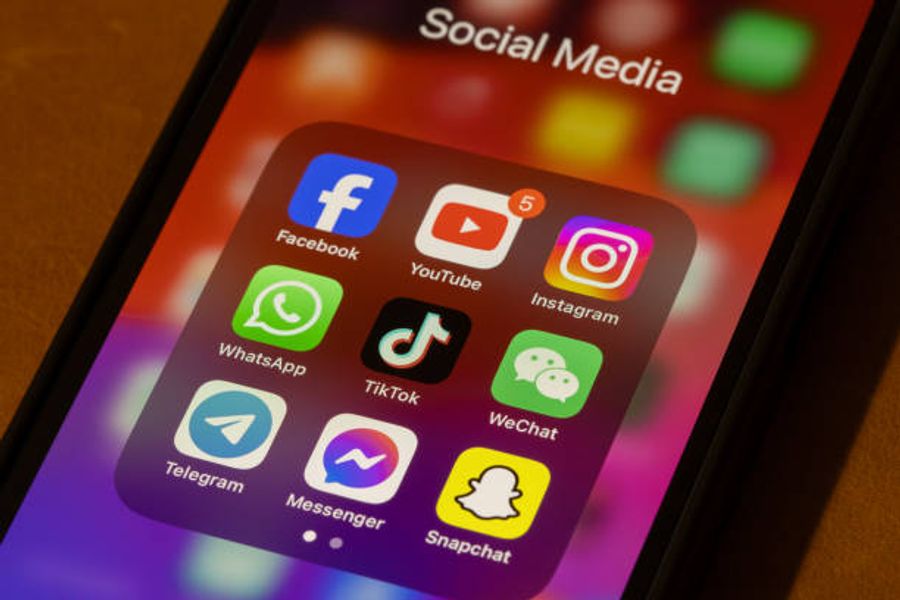
Most brands treat social media as a content distribution channel. Post the product. Show the lifestyle. Add a link in bio.
That is not a social media strategy. That is shouting into a void.
The accounts that actually build audiences and drive revenue are built around a person, not a product. Someone specific, with a specific perspective, a specific sense of humour, a specific way of talking to their audience that makes people come back not because they want to buy something but because they genuinely want to see what this person posts next.
This is not optional. It is the whole thing.
What actually works on TikTok:
- A real person on camera with a genuine perspective or sense of humour
- Consistent posting, meaning five to seven times per week minimum
- Content that entertains first and sells second or third
- Responding to comments and using them as content prompts
- A consistent point of view that makes people feel like they know you
What kills TikTok accounts:
- Polished branded content that looks like an ad
- Posting twice a week and wondering why nothing grows
- Talking about the product in every video
- No personality, no perspective, no reason to follow
The brands winning on TikTok organically are not winning because they have a great product. They are winning because someone on their team is genuinely entertaining and shows up consistently. That person becomes the reason people follow. The product becomes the thing that person happens to sell.
What actually works on Instagram:
- Reels that hook in the first two seconds
- Behind the scenes content that makes people feel like insiders
- UGC and customer content mixed in with brand content
- Stories used for personality and connection, not just promotion
- A consistent visual identity that makes the grid feel intentional
Instagram's organic reach is significantly lower than TikTok for new accounts. But its conversion rate for warm audiences is higher. Think of TikTok as discovery and Instagram as retention and conversion for the audience you already have.
The person running these accounts matters more than the product
This is the part most brands skip.
They hire a social media manager who posts consistently but has no real personality on the account. Or the founder posts occasionally when they remember to. Or they outsource it to an agency that produces content that looks professional and generates no engagement.
The brands with genuinely high organic engagement all have one thing in common. There is a real person behind the account with a real voice and a real reason for people to care. That person posts so consistently that followers feel like they have a relationship with them. The product is almost secondary to the trust that person has built.
Finding or developing that person is one of the most valuable things a DTC brand can do in 2025. It is also one of the hardest to fake.
Channel 3: Email and retention
It is six to seven times more expensive to attract a new customer than to keep one you already have. A 5 percent boost in customer retention can increase profits by 25 to 95 percent. Juliesantiano
Every customer you retain is a customer you do not have to pay to re-acquire. The second and third purchase from an existing customer has near zero acquisition cost.
Email marketing converts at 10.3 percent according to IRP benchmarks. Crawlapps That is five to seven times the conversion rate of paid social traffic.
The minimum email setup every store needs running:
- Abandoned cart flow: recovers 5 to 15 percent of abandoned carts automatically
- Browse abandonment flow: reaches visitors who looked but did not add to cart
- Post-purchase sequence: drives reviews, referrals, and repeat purchases
- Win-back flow: reaches customers who have not bought in 90 days
These run in the background and recover revenue permanently on autopilot. Every customer paid ads acquires feeds this system and makes the next acquisition cheaper on a blended basis.
Channel 4: Affiliate and performance partnerships
Affiliate changes the economics of acquisition by shifting cost from upfront ad spend to a commission paid only when a sale happens.
You do not pay to acquire the customer unless the sale actually occurs.
The constraint: good affiliates do not promote products that do not already convert. If your store is struggling to convert organic traffic, affiliates will send traffic to the same store that is already failing. The channel does not fix a conversion problem.
Affiliate works best as a scaling channel once you have proof that your store converts and your product satisfies customers. At that point it layers revenue on top of what paid and organic are already generating without proportionally increasing your cost base.
The order that actually works
The brands that figure this out do not do everything at once. They build in sequence.
Step 1: Use paid ads to find what converts
Not to make money. To get data. What hook, what angle, what product, what audience. Paid ads give you this information in 48 to 72 hours. SEO and organic content take a year to produce the same insight.
Step 2: Build organic content that already has proof
Once you know what converts, create content around those angles. You are not guessing anymore.
Step 3: Build email to retain every customer
The cost of the first acquisition is high. Make it worth it by extracting full value from every customer over time.
Step 4: Add social media as a long-term brand asset
This requires the right person, posting consistently, with a genuine voice. Start this on day one because it takes six to twelve months to build meaningful momentum.
Step 5: Add affiliates
Once everything above is working Performance-based growth layered on top of a system that is already converting.
The result is a blended CAC that falls over time as organic and retention grow. Paid ads become one channel in the mix rather than the entire business model.
The honest summary
Roughly 90 percent of DTC startups close by their fifth year. About 30 percent fail in the first year and 70 percent by year three. Most fail because they rely too heavily on paid ads while ignoring margins, fulfilment, and loyalty. inBeat Agency
The difference between stores that make it and stores that do not is rarely the product.
It is whether the founder understood the full unit economics before they started spending.
The questions to answer before you start:
- Is my AOV high enough to absorb a $30 to $80 customer acquisition cost and still make margin?
- Do I have a retention strategy that makes every acquired customer worth more over time?
- Is there someone in my business who can build a genuine, entertaining, consistent social media presence for the long term?
- Do I have six to twenty-four months of runway to build organic channels before they produce meaningful traffic?
If the answer to all four is yes, the business can work.
The real cost of running an Ecom brand With $40 AOV
| Cost | Monthly | 6 Months |
|---|---|---|
| Paid ads | $2,000 | $12,000 |
| Shopify | $79 | $475 |
| Email (Klaviyo) | $50 | $300 |
| Content and UGC | $400 | $2400 |
| Apps and tools | $150 | $900 |
| Total | $2,679 | $16,074 |
Estimated revenue: $5,280
Net loss on revenue vs total spend: $10,794
The only things that change this number are better creative driving a lower CPC, a conversion rate above average, email recovering abandoned carts adding 10 to 15 percent on top, and repeat purchases from those 132 customers that cost you nothing to acquire a second time.
Without those four things working the math does not improve no matter how much you spend.
Frequently Asked Questions
How much does it cost to start an ecommerce store?+
Is ecommerce still profitable in 2026?+
Why is my ecommerce store losing money on ads?+
What is a realistic ecommerce conversion rate?+
How much should I spend on Facebook ads for ecommerce?+
What average order value do I need to run profitable Facebook ads?+
How long does it take for an ecommerce store to become profitable?+
Why do most ecommerce stores fail?+
What is customer acquisition cost in ecommerce and why does it matter?+
You now know what most store owners find out after spending $20,000.
If your numbers do not add up on paper they will not add up in an ad account. We audit ecommerce brands and tell you exactly whether your AOV, margin, and acquisition cost can support a profitable business before you burn your budget finding out.
