AI UGC Platforms Explained: Top Tools, Pricing Breakdown, and When to Use Them
The Honest Guide for Ecommerce Brands Choosing an AI UGC Tool in 2026

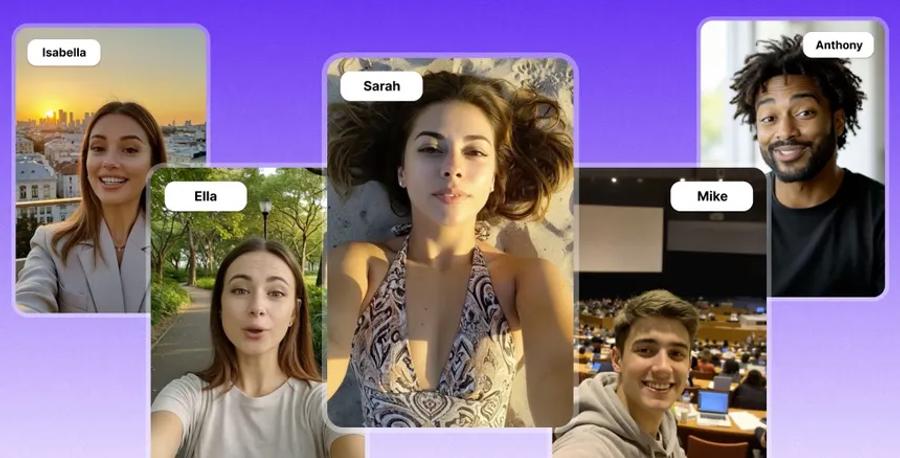
Brands can now produce UGC-style video ads without hiring a single creator.
AI UGC platforms take a text script, apply an AI-generated actor with realistic lip-sync and natural gestures, and output a finished video in two to four minutes. The resulting content looks like someone filmed a casual talking-head video on their phone, which is the format that consistently outperforms polished brand creative on Meta and TikTok.
The technology has matured rapidly. As of early 2026, the best AI actors are convincing enough that most viewers cannot identify them as AI-generated. The hook-testing workflow that used to require two weeks and over $1,200 for a human creator to produce eight variations can now be completed in 45 minutes for roughly $88 in platform credits, according to independent testing documented by AI Funnel Insider's 2026 Arcads review.
The question for most ecommerce brands is not whether to use these tools. It is which tool fits your production volume, budget, and performance goals, and where AI UGC fits in a broader creative strategy that still includes real creator content. This article answers both questions with verified pricing and honest capability assessments.
01What Is AI UGC and How Is It Different from Real UGC?
AI-generated UGC is video content produced using artificial intelligence tools that simulate the appearance, voice, and body language of a real person. You write a script, select an AI actor from the platform's library, and the system generates a video of that actor delivering your script in a casual, native-looking format suitable for paid social ads.
The key difference from real UGC is authenticity of experience. A real creator speaks from genuine product experience. Their voice has the micro-variations and emotional texture that comes from actually using something. An AI actor delivers whatever script you write with technical precision but without lived experience. For most performance ad formats on Meta and TikTok, this difference is less significant than it might seem. Many viewers cannot distinguish AI-generated content from real creator content when the script is strong and the actor quality is high.
Where the difference matters: product categories requiring genuine physical demonstration (fitness, food, apparel fitting), high-trust categories where authenticity is the primary purchase signal (health, supplements, skincare at premium price points), and emotional storytelling that depends on real human conviction. In these contexts, AI UGC is a useful testing tool but not a scaling tool. Real UGC remains the production standard for campaigns above proof-of-concept stage.
02How AI UGC Platforms Work
The core workflow is the same across most platforms. You write or generate a script, typically 15 to 60 seconds in length, select an AI actor from the platform's library, choose a voice, set the format and aspect ratio for your target platform, and render the video. More advanced platforms allow you to generate multiple hook variations of the same script in a single batch, create custom avatars from your own likeness, and integrate product images or URLs to auto-generate supporting visuals.
Where platforms differ significantly is in the quality of the AI actors, the realism of lip-sync and gesture generation, the breadth of actor diversity, the speed and reliability of rendering, and the pricing model. The credit systems used by most platforms require careful attention: the per-video cost depends on which features you use, and low headline prices can obscure a high real cost per completed ad.
03The Top AI UGC Platforms for Ecommerce Brands in 2026
1. Arcads
What it does best: Arcads is the most specialised AI UGC platform for performance marketing. It is built specifically for producing UGC-style talking-head video ads for Meta and TikTok, and everything about the product reflects that focus. The AI actors are optimised to look like real creators filming a casual video rather than corporate presenters. The batch hook-variant workflow, which generates eight to ten versions of the same script with different hooks or actors in a single session, is specifically designed for the kind of creative testing that performance marketers run at volume.
Key features: 1,000 or more AI actors across age, gender, ethnicity, and setting, according to the platform's 2026 library documentation, which is 43 percent more than HeyGen's 700 avatars and 335 percent more than Synthesia's 230 avatars, per AI Funnel Insider's April 2026 comparison. Script-to-video in approximately four minutes. Batch variation generation for hook testing. Speech-to-speech feature that maps your voice onto any actor. ElevenLabs voice integration on higher plans. Average render time of 4.2 minutes per video in independent testing.
Limitations: No free trial. You must commit to a paid plan before evaluating output quality. Credits do not roll over on lower-tier plans, so unused videos are lost at month end. Less effective for videos longer than 45 to 60 seconds, where lip-sync can drift. Render queues back up during peak US evening hours. Accent quality for non-US and non-UK English is uneven.
| Plan | Price | Videos Included | Notes |
|---|---|---|---|
| Starter | ~10/mo | 10 videos | ~1 effective cost per video |
| Creator | ~20/mo | 20 videos | ~1 effective cost per video |
| Pro | Custom | Unlimited | API access, ElevenLabs integration, team seats |
Best for: Performance marketers running $500 or more per month in paid social who need to test multiple hook variations per week. DTC brands fighting ad fatigue on Meta and TikTok who need fresh creative on a weekly cycle. Agencies managing creative testing at scale across multiple client accounts.
2. Creatify
What it does best: Creatify is the most accessible entry point into AI UGC for ecommerce brands. Its URL-to-video feature accepts a product page URL from Amazon, Shopify, or most ecommerce platforms and automatically generates a complete video ad with script, AI actor, voiceover, and relevant B-roll visuals. For brands with large product catalogues who need to produce many ads quickly without writing individual scripts, this is the standout feature in the market.
Key features: URL-to-video automation. Over 500 AI avatars with 170 or more voices across 29 or more languages. AI script writer. Batch mode for generating multiple variations. Free tier available. Custom avatar creation for brand consistency on paid plans. Watermark-free exports on paid plans.
Limitations: The credit system requires careful planning. Starting plan is $39 per month for 100 credits, but quality videos consume 10 to 20 credits each, meaning the Starter plan realistically produces five to ten usable videos per month rather than the headline number. Credits expire every two months with no rollover, which creates waste for brands with variable production schedules. Superscale AI's independent review noted a consistency issue with avatar quality: not all 500 avatars are equally convincing, requiring credit-burning tests to find the best options. Some reviewers noted that voiceovers can sound robotic compared to competitors at similar price points.
| Plan | Price | Credits | Notes |
|---|---|---|---|
| Free | Free | 10 credits/mo | Videos include watermarks |
| Starter | 9/mo (3 annual) | 100 credits per 2 months | |
| Pro | 9/mo | More credits | Batch processing, custom avatars |
| Enterprise | Custom | Custom |
Best for: Shopify brands with multiple product SKUs who want to generate first-draft video concepts quickly from product pages. Brands new to AI UGC who want to test the format with a low monthly commitment before moving to a more specialised platform. Teams that need language diversity across international markets.
3. HeyGen
What it does best: HeyGen is the most mature and broadly capable AI avatar video platform in the market, trusted by over 40,000 businesses and generating $95 million in annual recurring revenue as of its most recent public figures. Its Avatar IV technology, released in August 2025, produces full-body motion with micro-expressions, natural head movement, and gesture tracking that remains the highest quality output in the category for professional-looking video. HeyGen supports 175 or more languages with fast, accurate lip-sync across all of them.
Key features: 230 or more AI avatars. Avatar IV for hyper-realistic motion and expression on paid plans. 175 or more language support with high-quality lip-sync. Instant avatar cloning from a short video clip for personal avatar creation. Unlimited video creation on paid plans (with Avatar IV minutes capped per plan). Free tier with three videos per month at no credit card required.
Limitations: HeyGen is not specifically designed for ad creative. The avatars skew toward corporate and professional presentations rather than casual creator content. EzUGC's independent 2026 review noted that Avatar IV minutes are capped on lower plans and that add-ons increase the real monthly cost significantly beyond the headline plan price. The platform is better suited to explainer videos, training content, and corporate communications than to scroll-stop social ads. Multiple user reviews cited mid-subscription pricing changes.
| Plan | Price | Videos | Notes |
|---|---|---|---|
| Free | Free | 3 videos/mo (up to 3 min each) | No credit card required |
| Creator | 9/mo | Unlimited standard avatars | Avatar IV and priority rendering cost extra |
| Team | 9/seat/mo | Unlimited standard avatars | 2-seat minimum |
| Enterprise | Custom | Custom |
Best for: Brands who need multilingual video content, high-quality avatar presentations for product explainers or tutorials, or professional-grade talking-head video for use across multiple channels. Brands testing AI video before committing to a specialised ad platform, using the free tier. Not the primary choice for performance ad testing.
4. Synthesia
What it does best: Synthesia is the enterprise gold standard for AI video, used by Amazon, Reuters, Accenture, and other large organisations for training videos, internal communications, and multilingual content production. Its avatars are slightly more realistic than HeyGen's on close-ups, and its render times are among the fastest in the market. At its Starter pricing, it represents competitive value for professional video production at scale.
Key features: 160 or more avatars across diverse demographics. 140 or more language support. Fast render times. Stronger enterprise security certifications than competitors. Sliding-scale pricing that shows exactly which plan you need for your target monthly video volume. Template library for common video formats.
Limitations: Synthesia is corporate-video-first, not ad-optimised. The avatars and output style are professional and polished, which works against the casual native look that performs best in paid social ads on Meta and TikTok. Webseotrends' March 2026 comparison noted it is "the enterprise gold standard for corporate training and internal communications" but explicitly flagged it as "completely wrong for social ads." For ecommerce ad creative, Synthesia is the least suitable of the five platforms reviewed here.
| Plan | Monthly Price | Annual Price | Notes |
|---|---|---|---|
| Starter | 9/mo | 8/mo | |
| Creator | 9/mo | 4/mo | |
| Enterprise | Custom | Custom | Unlimited video minutes |
Best for: Brands that need professional video content for uses beyond paid social ads: product explainer videos for landing pages, onboarding content for new customers, multilingual content for international markets. Not recommended as a primary tool for ecommerce ad creative testing.
5. MakeUGC
What it does best: MakeUGC is the most budget-conscious option in this comparison, positioned specifically for ecommerce brands that want AI UGC-style ads without Arcads' price commitment. It has a 300-plus actor library with solid lip-sync and TikTok, Reels, and YouTube Shorts aspect ratios pre-configured. For brands testing whether AI UGC works for their product category before investing in a more powerful platform, MakeUGC is the lowest-risk entry point.
Key features: 300-plus AI actors. TikTok, Reels, and YouTube Shorts aspect ratios pre-set. Competitive price per video on higher plans, with effective cost dropping below $10 per video at volume. Solid lip-sync quality for fast-cut social ads. Purpose-built for performance ad creative rather than corporate content.
Limitations: Photo-realism on close-up shots trails Arcads. The platform lacks some of the advanced batch-testing and hook-variant workflows that make Arcads particularly efficient for high-volume creative testing. Output quality is described by independent reviewers as solid for fast-cut social ads but not competitive with Arcads on sustained close-up performance.
| Plan | Price | Notes |
|---|---|---|
| Starter | 9/mo | Budget-friendly entry point |
| Higher Plans | Custom | Effective cost drops below 0/video |
Best for: Early-stage Shopify brands wanting to validate the AI UGC format before committing to higher-priced platforms. Brands prioritising video volume over maximum realism. Those transitioning from Arcads' price point who want a meaningful step down in cost.
04Pricing Comparison Summary
Most affordable entry point: HeyGen at $29 per month for unlimited standard avatar videos, or MakeUGC at $29 per month for ad-specific content. Creatify's free tier with watermarked videos is the cheapest possible starting point for evaluation.
Best for scale: Arcads, where the batch hook-variant workflow produces eight to ten variations in a single session and the per-video cost at $11 is the right benchmark for high-volume performance ad testing. For brands producing 50 or more videos per month, Arcads' subscription economics outperform credit-based alternatives.
Best actor quality: Arcads for UGC ad realism specifically. HeyGen Avatar IV for polished professional quality in broader video applications. Synthesia for corporate presentations and training content.
Best for beginners: Creatify for its URL-to-video automation that generates ads from product pages without requiring any script writing. HeyGen for its free tier and beginner-friendly interface. MakeUGC for its low price commitment and straightforward ad-specific workflow.
05AI UGC versus Real UGC: The Honest Comparison
The right mental model is that AI UGC and real UGC serve different stages of the creative testing cycle, not that one replaces the other.
AI UGC is fast, scalable, and cheap enough to test concepts you are not yet confident in. A concept-level creative test that would cost $800 to $1,600 with real creators can be produced for $80 to $110 with AI. For identifying which hooks, angles, and message frameworks resonate with your audience before committing to real creator production, AI UGC is the right tool.
Real UGC is more authentic, more emotionally convincing, and more effective for scaling. Once AI testing has identified a winning concept and hook framework, recreating that creative with a real creator who can speak from genuine product experience typically produces higher sustained performance as budget scales. Real creators also add social proof credibility that AI actors cannot: 60 percent of consumers believe UGC is the most authentic marketing content, according to Bazaarvoice's UGC statistics, and authenticity is increasingly difficult to simulate as AI detection improves.
06When to Use AI UGC
Rapid concept testing. When you have multiple possible messaging angles and want data on which one resonates before investing in real creator production.
High-volume hook testing. Generating eight to ten hook variations of a single script to identify which opening drives the strongest CTR, before paying creator rates to produce the winner.
Low-budget creative refresh. Brands spending less than $2,000 per month on paid social who need to refresh creative frequently to fight ad fatigue but cannot afford real creator rates at volume.
Multilingual market expansion. Testing ad performance across international markets in languages where sourcing real creators is expensive or logistically complex.
07When Not to Use AI UGC
High-trust product categories. Health products, supplements, and premium skincare, where the authenticity of real customer testimonials is the primary conversion signal. AI actors cannot replicate the credibility of a real person describing a genuine experience.
Physical product demonstrations. Products that require physical interaction to demonstrate their value: food preparation, fitness equipment in use, apparel fit and styling. AI actors cannot hold products convincingly or demonstrate physical performance.
Emotional storytelling at scale. Campaigns built on genuine transformation narratives, before-and-after stories, or deeply personal testimonials. The emotional conviction of a real experience cannot currently be simulated by AI without risking authenticity signals that undermine the campaign's credibility.
08How to Use AI UGC in a Real Ecommerce Ad Strategy
The most effective ecommerce brands use AI UGC as the first stage of a creative production cycle, not as the entire system. Here is how that cycle works in practice.
Stage one uses AI to produce three to five concept-level creatives testing different angles: problem-solution, transformation, social proof, comparison, and feature demonstration. Each concept is produced as two to three hook variations using a platform like Arcads or Creatify. Total production cost is $100 to $200. Test budget per creative is $50 to $100.
Stage two measures CTR, hook rate, and CPA across all AI creatives over five to seven days. One or two concepts will demonstrate meaningful signal. Those are the winning angles.
Stage three recreates the winning angles with real creators on a marketplace platform like Billo, Insense, or direct outreach. The brief for the real creator is built around the winning hook and angle identified in AI testing. Real creator production cost is $150 to $400 per asset, but you are only producing the concepts that have already demonstrated they resonate.
Stage four scales budget behind the real creator versions of winning concepts, knowing they start from a proven framework. The AI testing phase reduced the number of real creator activations required to find a scalable winner from 15 to 20 speculative productions to three to five targeted ones. That efficiency is the real value proposition of AI UGC.
09Common Mistakes to Avoid
Treating AI UGC as a complete creative strategy. AI UGC is a production input. The strategy is testing, identifying winners, and scaling the right content through the right channels. Brands that generate AI videos without a testing and scaling framework are spending money on production without a mechanism for extracting value from it.
Not testing enough content. The advantage of AI UGC is speed and cost per asset. Using it to produce two or three videos per month and expecting predictable winners does not leverage the format's actual capability. Produce 10 to 20 AI assets per testing cycle and let volume compensate for the inherently low creative hit rate.
Weak scripts. AI UGC amplifies copy quality. A weak script delivered by a realistic AI actor produces a weak ad. AI Funnel Insider's Arcads testing summary noted: "The tool amplifies copy, it does not write it." The script quality determines the performance ceiling of any AI-generated video. Invest time in hook testing and angle development before producing anything at scale.
10AI UGC Is a Production Tool. The System Is What Drives Revenue.
The AI UGC category is growing rapidly. The global AI video generator market hit $1.25 billion in 2025 and is projected to reach $10.35 billion by 2030, according to Grand View Research data cited in AI Funnel Insider's Arcads review. The tools are improving quarterly. What seemed like a novelty format in 2024 is now a legitimate component of performance marketing infrastructure for ecommerce brands.
But the tool is not the strategy. The goal is not to generate AI videos. The goal is to find winning ad concepts efficiently, scale them profitably, and build a creative pipeline that sustains performance as ad fatigue sets in. AI UGC accelerates the testing phase of that cycle. Real creator content sustains the scaling phase. Used together, with a clear testing framework and a paid distribution system behind them, they form a creative production model that gives brands of any size the volume and quality needed to compete in a performance marketing environment where creative quality drives 70 to 80 percent of outcomes.
Sources
- AI Funnel Insider: Arcads AI Review 2026 Features Pricing and Real Testing Data
- Dupple: Arcads AI Review 2026 Features Pricing and Alternatives
- Webseotrends: HeyGen vs Arcads Best AI Video Tool for UGC Ads in 2026
- Superscale AI: Creatify AI Pricing 2026 Real Cost Per Approved Ad
- EzUGC: HeyGen Review 2026 Real Costs and Avatar IV Limits
- EzUGC: Creatify AI Review 2026 Best UGC Video Tool
- Argil: Compare Pricing for UGC Video Production Tools Best Tools 2025 (HeyGen Arcads Creatify Comparison)
- AI Video Picks: Best AI Video Tools 2026 Tested and Ranked (HeyGen Synthesia Arcads MakeUGC)
- Reloop: 5 Best AI UGC Generators 2026 Tested and Ranked Honest Review
- Vidmetoo: Creatify AI Review 2025 Features Performance and Alternatives
- Lapis: 7 Best HeyGen Alternatives for AI UGC Video Ads in 2026
- Argil: HeyGen Pricing 2025 How It Compares to Synthesia (Synthesia Pricing Data)
- LensGo: Seedance 2.0 vs Arcads Creatify and HeyGen AI UGC Ad Generator 2026
Frequently Asked Questions
What is the best AI UGC platform for ecommerce ads in 2026?+
How much does AI UGC cost per video?+
Is AI UGC as effective as real UGC for ads?+
Do I need to disclose that my ads use AI-generated content?+
What is the difference between Arcads and HeyGen?+
Can I use AI UGC if I have a small ad budget?+
How do I write a good script for AI UGC ads?+
AI UGC Is a Production Tool. The System Around It Is What Drives Revenue.
We build the testing frameworks, creative strategies, and paid distribution systems that turn AI UGC into a predictable performance channel for Shopify brands. Book a free call.
